
 Flickr
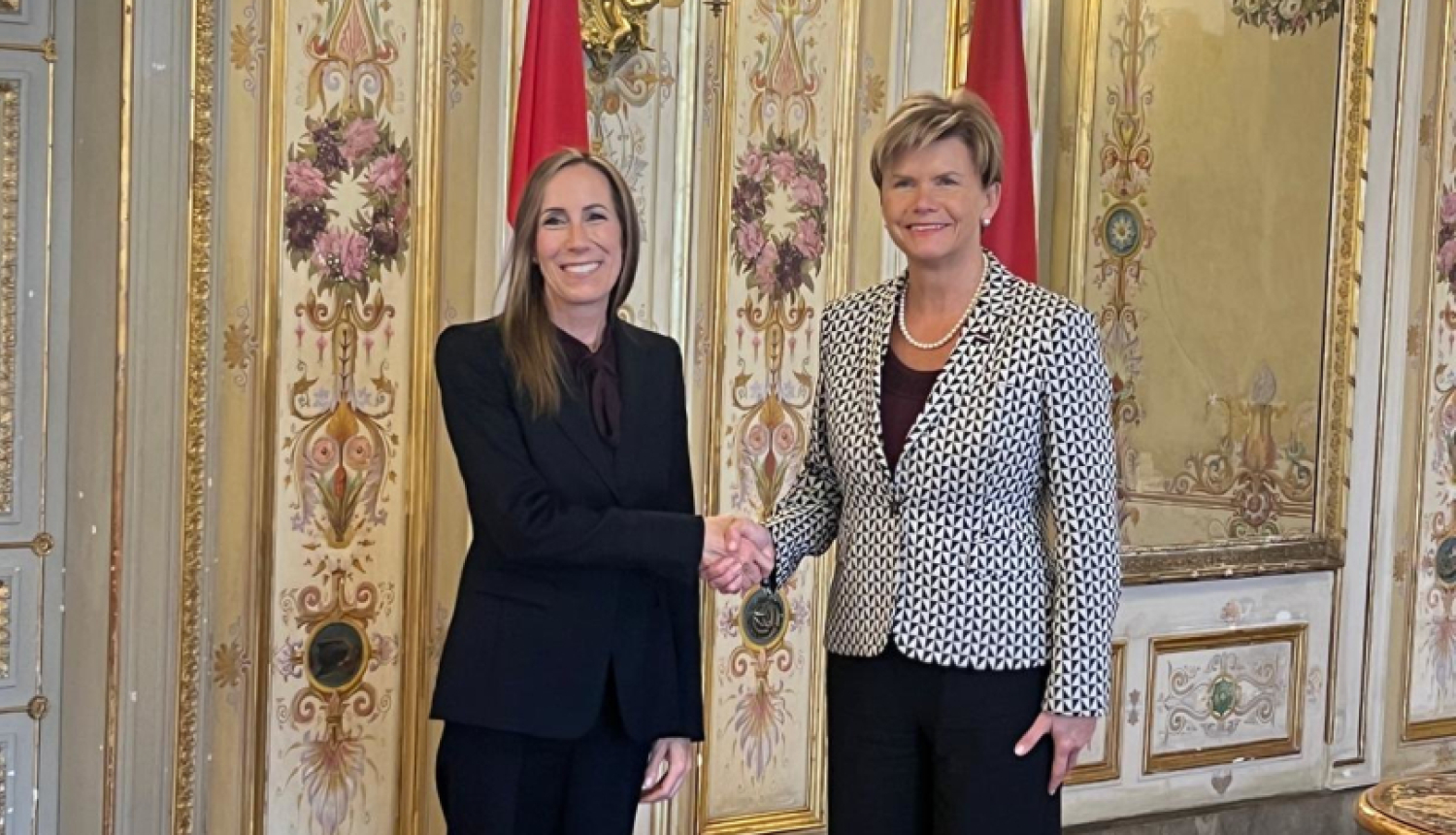
On 7 May 2026, during a working visit to Hesse, Germany, the Minister of Foreign Affairs, Baiba Braže, met with Astrid Wallmann, President of the Landtag of Hesse, and Dr Matthias Büger, a member of the Baltic Friendship Group of the Landtag of Hesse.
During the talks with the representatives of the Landtag of Hesse, the Foreign Minister highlighted the excellent relations between Latvia and Germany and outlined cooperation projects between the two countries in the fields of economy and defence, particularly emphasising Latvia's proposals in the areas of information and communication technology (ICT), digitisation, defence technology, and innovation. The parties discussed current cooperation with the State of Hesse, including parliamentary dialogue and the visit to Latvia in June this year by the Baltic Friendship Group of the Landtag of Hesse.
The officials also discussed current international issues – developments in the Middle East, transatlantic relations, and security matters, including the need to continue strong political, military, and humanitarian support for Ukraine. The Foreign Minister praised Germany’s significant contribution to NATO’s eastern flank, particularly highlighting Germany’s continued presence in the Baltic Sea region.
During the visit, the Foreign Minister also visited the NATO Security Assistance and Training for Ukraine (NSATU) Command Centre in Wiesbaden, where she met with Deputy Commander Major General Ulf Häussler.
At the conclusion of the visit, the Minister attended a working dinner hosted by Dr Johann Wadephul, Federal Minister for Foreign Affairs of Germany, and Antonio Tajani, Deputy Prime Minister and Minister of Foreign Affairs of Italy.
During discussions on the situation in the Middle East, particular attention was paid to the consequences of the blockade of the Strait of Hormuz for the global economy and to international efforts to resolve the situation swiftly and effectively.
In the context of transatlantic cooperation, preparations for the NATO Summit in Ankara this July were discussed, where it is essential to reaffirm the Alliance’s unity, its commitment to continue providing long-term support to Ukraine, and to demonstrate progress regarding the increase in defence spending. The Foreign Minister emphasised that the United States and close transatlantic cooperation are indispensable foundation for European security, while Europe must assume greater responsibility for its own security and defence.
The ministers also discussed the European Union’s geopolitical priorities, including progress in the European Union’s enlargement process. They discussed the progress of the candidate countries’ European integration process, as well as the European Union’s role in facilitating this process while maintaining consistent requirements regarding the fulfilment of established criteria.