
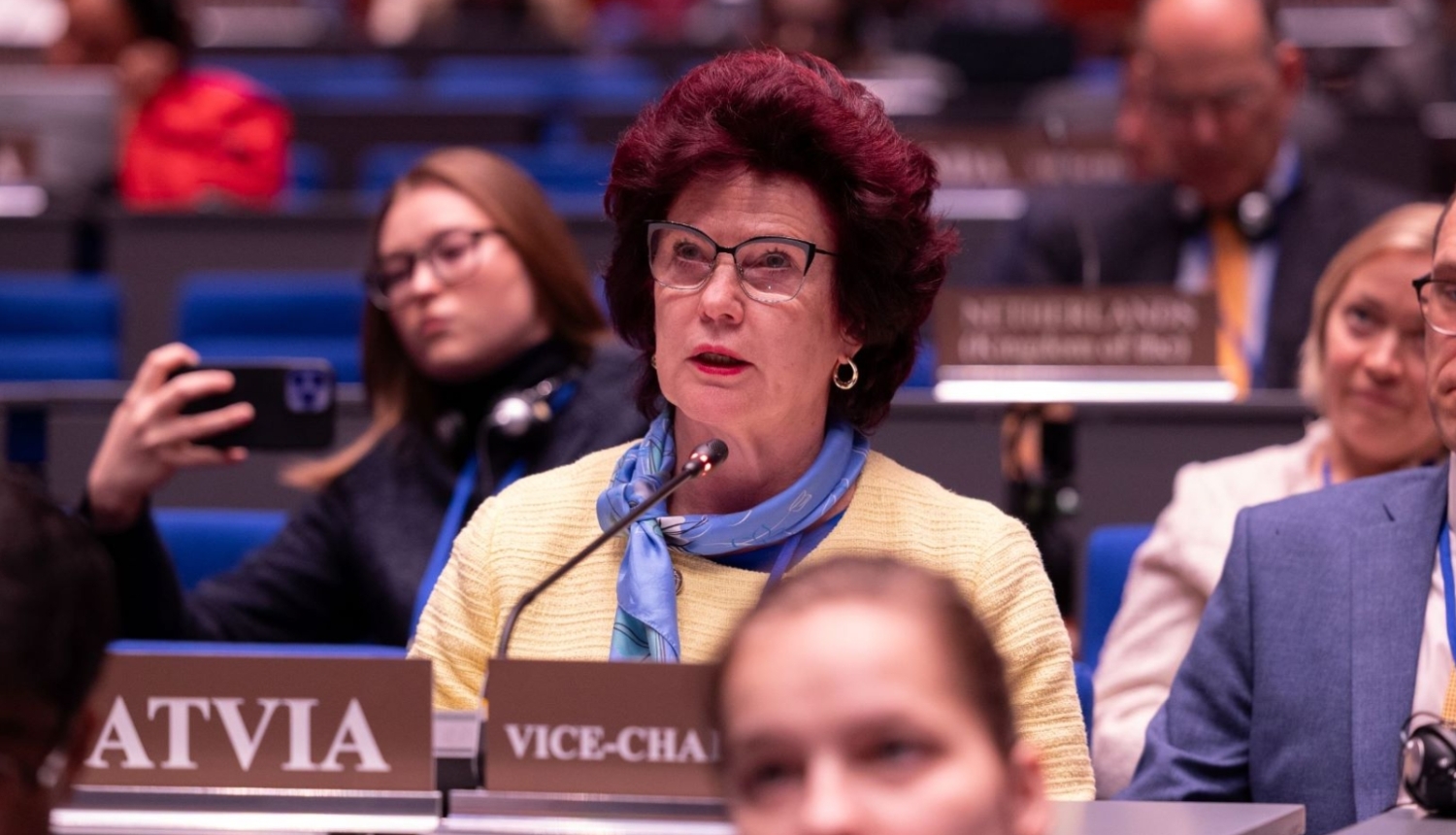
On 23 November 2026, at the 31st Session of the Conference of the States Parties to the Organisation for the Prohibition of Chemical Weapons (OPCW) in The Hague, Latvia and Montenegro were confirmed as Vice-Chairs to the Conference, representing the Eastern European Group.
Support for Latvia’s candidacy reflects the international community’s recognition of Latvia’s responsible engagement in international organisations, strengthening a world order based on international law, including by limiting Russia’s representation in key positions within international organisations. In the vote on 24 November, the Conference’s States Parties overwhelmingly rejected Russia’s candidacy for a seat on the OPCW Executive Council from the Eastern European Group and elected Estonia and Poland to the Executive Council by a significant majority of votes, demonstrating that a state which violates the Convention cannot lead its implementation.
Addressing participants at the Conference on 24 November, Ambassador Solvita Āboltiņa, Latvia’s Permanent Representative to the OPCW, emphasised:
The findings of Ukraine’s national investigation report confirm the use of toxic chemicals as a method of warfare by Russia in Ukraine, documenting more than 14,000 instances in which Russia has violated the Chemical Weapons Convention. Latvia urges the Technical Secretariat of the OPCW to exercise its mandate and take all necessary measures to identify those responsible and hold Russia accountable.
The 31st Session of the Conference of the States Parties to the Organisation for the Prohibition of Chemical Weapons is taking place in The Hague to review progress in implementing the Convention and discuss a number of pressing issues, including Russia’s use of chemical weapons in Ukraine, Syria’s progress in identifying and destroying chemical weapons, and strengthening the OPCW’s technical capacities. The conference is being held from 23 to 27 November 2026.
Latvia and Montenegro will serve as Vice-Chairs until the next session of the Conference in November 2027, contributing to the preparation of the Conference’s organisational and substantive work.
Background information
The Chemical Weapons Convention or Convention on the Prohibition of the Development, Production, Stockpiling and Use of Chemical Weapons and on their Destruction entered into force on 29 April 1997. Latvia signed the Convention on 6 May 1993, when it was finalised. The Convention is the only global instrument that prohibits the development, production, stockpiling, transport and use of chemical weapons, and establishes a strict verification mechanism. The implementation of the Convention is monitored by the Organization for the Prohibition of Chemical Weapons. 193 countries have joined the Convention.