


 Flickr
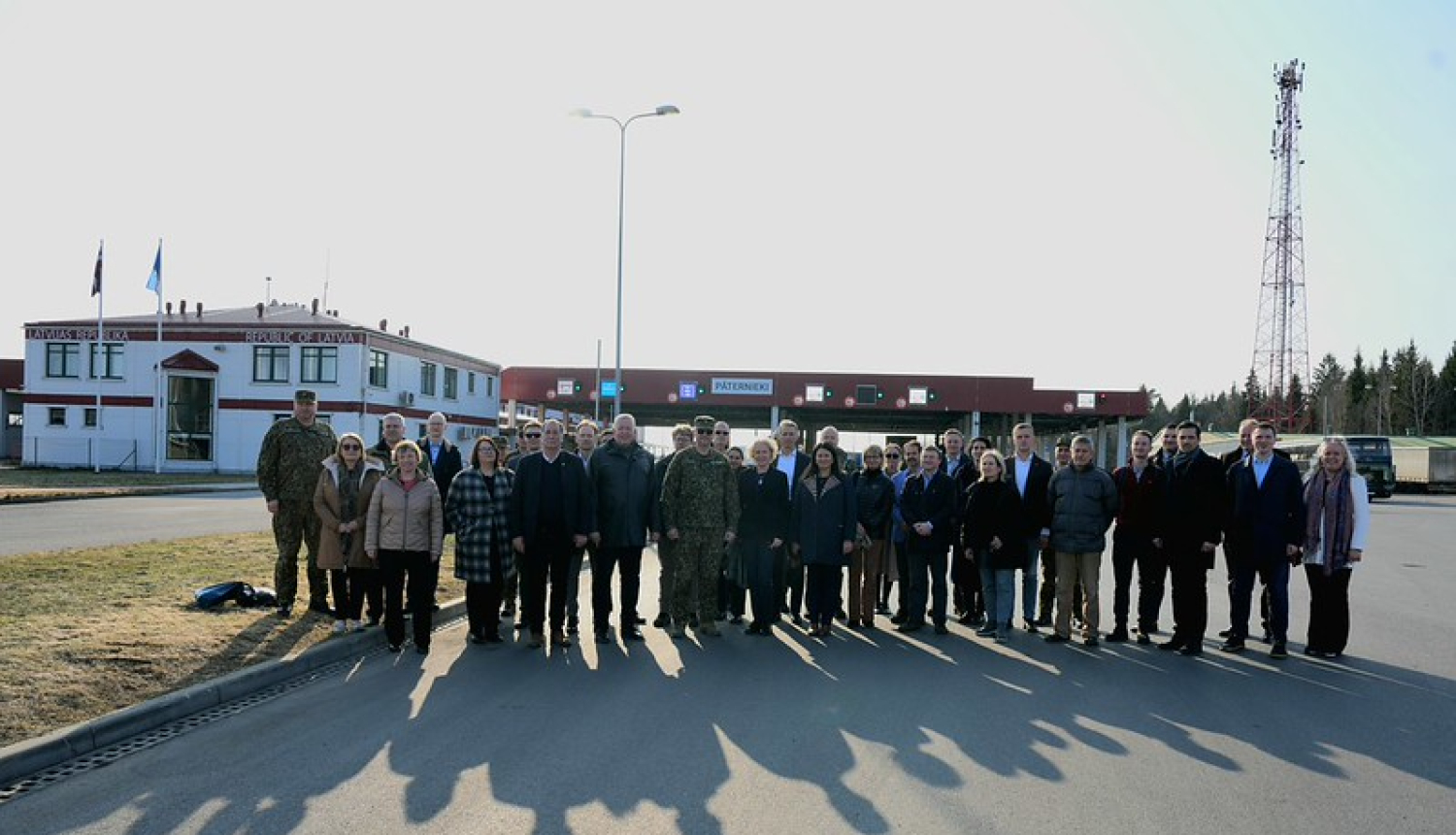
On 27 March 2026, the Ministry of Foreign Affairs, in cooperation with the Ministry of the Interior, organised a visit to the ambassadors from EU, NATO, and Schengen Area countries accredited to Latvia to the country’s eastern border. The main objective of the visit: to promote understanding of the situation on Latvia’s eastern border and to present the achievements and plans regarding the strengthening of Latvia’s external border as an EU and NATO member state. During the visit, special attention was paid to the hybrid threats posed by Russia and Belarus, as well as to the work of Latvian customs in implementing EU export and sanctions controls, including attempts to circumvent sanctions imposed on Russia and Belarus.
During the visit, the ambassadors met with the Chief of the State Border Guard, General Guntis Pujāts; the Head of the Border Control and Immigration Control Service, Lieutenant Colonel Vadims Grickovs; as well as the Deputy Director General in the Field of Customs, Director of the National Customs Board, Raimonds Zukuls. The ambassadors visited the Accommodation Centre for Detained Foreigners Daugavpils, class 1 border crossing point Pāternieki, and the Piedruja Border Guard Unit in Krāslava. During their meeting with Krāslava Mayor Gunārs Upenieks, the ambassadors learned about the development potential of the Latgale region in terms of business, security, and strategic infrastructure, and were briefed on the recent incident involving a drone in the Krāslava Municipality near the village of Dobročina.
Artjoms Uršuļskis, Parliamentary Secretary of the Ministry of Foreign Affairs, emphasised that EU and NATO border states have invested more in security and defence than other EU countries, including by strengthening the EU and NATO’s eastern border – the first line of defence.
“In the current geopolitical reality, we must recognise that without security, there can be no peace or prosperity. Therefore, we must continue to strengthen NATO’s defence and deterrence capabilities on the eastern flank, adapting them to the threats posed by Russia and Belarus,” noted Artjoms Uršuļskis. He emphasised that Latvia takes a highly responsible approach to strengthening the EU and NATO’s eastern border. Work continues on improving infrastructure and implementing tougher control procedures to prevent attempts to circumvent sanctions, halt the flow of illegal migration, and counter various other hybrid warfare activities carried out by Russia and Belarus. Latvia expects greater solidarity and support from the EU and NATO in this area.
Artjoms Uršuļskis emphasised:
“The European Union must strengthen its security and defence capabilities, borders and societal resilience, competitiveness, and the EU’s global influence. This is in the interests of the security of all EU citizens. Therefore, in discussions on the EU’s multiannual budget for 2028–2034, one of the priorities that Latvia also advocates for is the need to allocate additional EU funding to countries and regions along the EU’s eastern border, including Latvia. The European Commission’s proposal for the EU’s multiannual budget positively highlights the eastern border in the context of border management. However, it does not sufficiently reflect the significant challenges and impacts on the countries of the region associated with Russia’s war of aggression against Ukraine, nor does it sufficiently take into account the socioeconomic impact on the countries bordering Russia and Belarus.”
Background information
On 16 March 2026, Latvia, in cooperation with the leading countries Finland and Poland, as well as the Member States Lithuania, Estonia, and Sweden, submitted the initial project application of Eastern Flank Watch to the European Commission for evaluation for funding under the European Defence Projects of Common Interest (EDPCI).
Latvia’s eastern border is a 457-kilometre-long section of the European Union and NATO’s external border, located at the borders of Latvia, Russia, and Belarus, serving as a shield against illegal migration and hybrid threats, thereby also ensuring the security and protection of the EU and NATO’s eastern external border. Given the geopolitical situation, strengthening the eastern border is a priority, including its technological development, security, and special support for economic growth and security in border municipalities (in Latgale and Alūksne).