

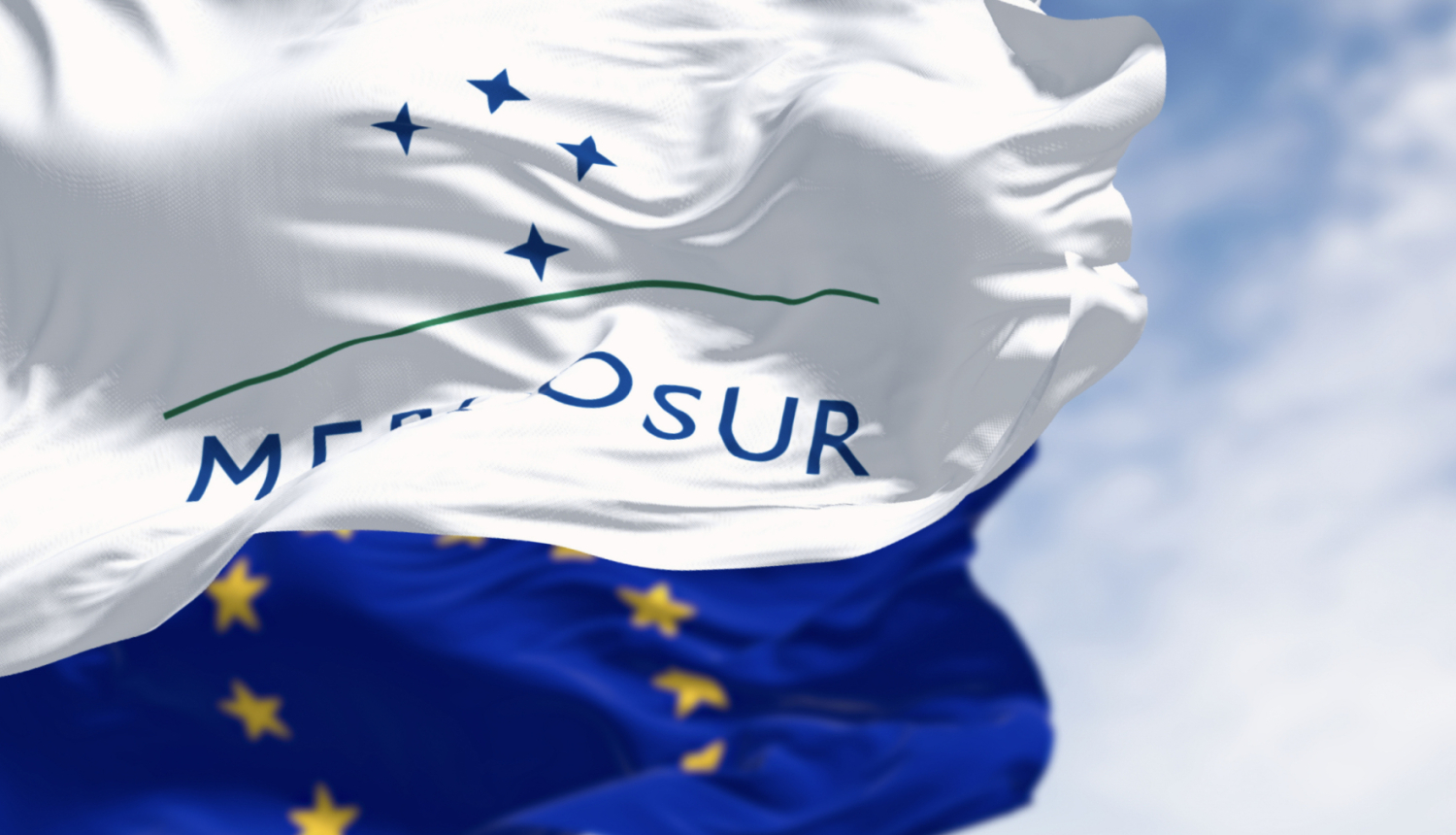
On Friday, 9 January 2026, in Brussels, Belgium, European Union Member States agreed to support the signing of the EU-Mercosur free trade agreement and the Partnership Agreement. On behalf of the EU, they will be signed by the President of the European Commission Ursula von der Leyen. The ratification of the EU-Mercosur Partnership Agreement will be decided by the national parliaments of the EU countries.
Foreign Minister Baiba Braže:
“Today, the EU has reached a historic agreement, giving the green light to the signing of the EU-Mercosur agreement. The agreement represents a strategic partnership with Latin American countries that will promote European and Latvian exports to new markets and create new jobs. Once concluded, the agreement will create the world’s largest free trade area, covering nearly a quarter of global GDP and creating a market of more than 700 million consumers in the EU and Brazil, Argentina, Paraguay, and Uruguay with great economic potential. For EU companies, the agreement will save EUR 4 billion in customs duties each year, as import tariffs on 91% of EU products in Mercosur countries will be removed.”
According to estimates, the agreement could increase the EU’s annual exports to Mercosur countries by up to 39%. The EU-Mercosur agreement will also create more than 440 000 jobs in Europe.
B. Braže further noted that, over the past twenty years, the expansion of the EU’s network of trade agreements with reliable partners worldwide has clearly demonstrated a positive impact. For example, following the introduction of EU free trade agreements, exports to the Republic of Korea increased almost tenfold (since 2011), to Canada by 166% (since 2017), and to Japan by 49% (since 2019).
BENEFITS FOR LATVIAN COMPANIES
- Entry into the South American market will be eased by lower or entirely removed customs duties and simpler customs procedures. For instance, for the EU, this agreement provides for the removal or significant reduction of customs tariffs on industrial goods, ICT products, and vehicles (currently 14–20% and 35%), and food and beverages (currently 10–55%).
- The agreement provides for lower tariffs on Latvia’s main export products, such as machinery, electrical equipment, timber products, chemicals, pharmaceuticals, and food products, alongside simpler customs procedures.
- The agreement will enable Latvian businesses to participate in global supply chains by cooperating with partners from other EU Member States who already export to this region. Mercosur countries will also open their public procurement markets and reduce barriers in the telecommunications, transport, and financial services sectors.
- Improved digital trade rules will allow Latvia’s IT sector to expand into the Mercosur market. Additionally, Latvian companies already active in the Brazilian market will benefit from the opening of the services sector, the removal of tariffs on machinery and electronics, etc.
- The agreement provides for specific solutions for the involvement of small and medium-sized enterprises in trade.
The Minister emphasises that the foreign service will continue to use the instruments at its disposal to represent Latvia’s economic interests, with supporting entrepreneurs in increasing their visibility, entering foreign markets, and attracting foreign investment and partners remaining among its key priorities.
Additional information
- On 6 December 2024, after 25 years of negotiations, a political agreement was reached on the conclusion of negotiations for an EU-Mercosur Free Trade Agreement.
- Mercosur (Mercado Común del Sur), or the Southern Common Market, is the leading trading bloc in South America, and currently its full members are Argentina, Brazil, Uruguay, and Paraguay.
- The agreement includes balanced protection for sensitive product categories in the EU agricultural sector (e.g. beef, ethanol, honey, sugar, poultry, etc.) in cases where increased imports from Mercosur countries would cause significant damage to EU producers. In order to ensure the protection of sensitive categories of EU agricultural products under the agreement, the EC has proposed a Regulation setting out procedures for the timely and effective implementation of bilateral safeguard measures for agricultural products. The EC will constantly monitor market trends with regard to the imports of sensitive agricultural products.
- The EU External Trade Policy is the exclusive responsibility of the EU, with the EC drafting trade legislation, conducting negotiations, and concluding international trade agreements.
- Facts, statistics, etc. about the Mercosur agreement (in Latvian)
- EU Common Commercial Policy (in Latvian)
- Baiba Braže: The EU must seize every opportunity and use any instrument to reduce Russia’s budget revenues, while protecting EU businesses