
 Flickr
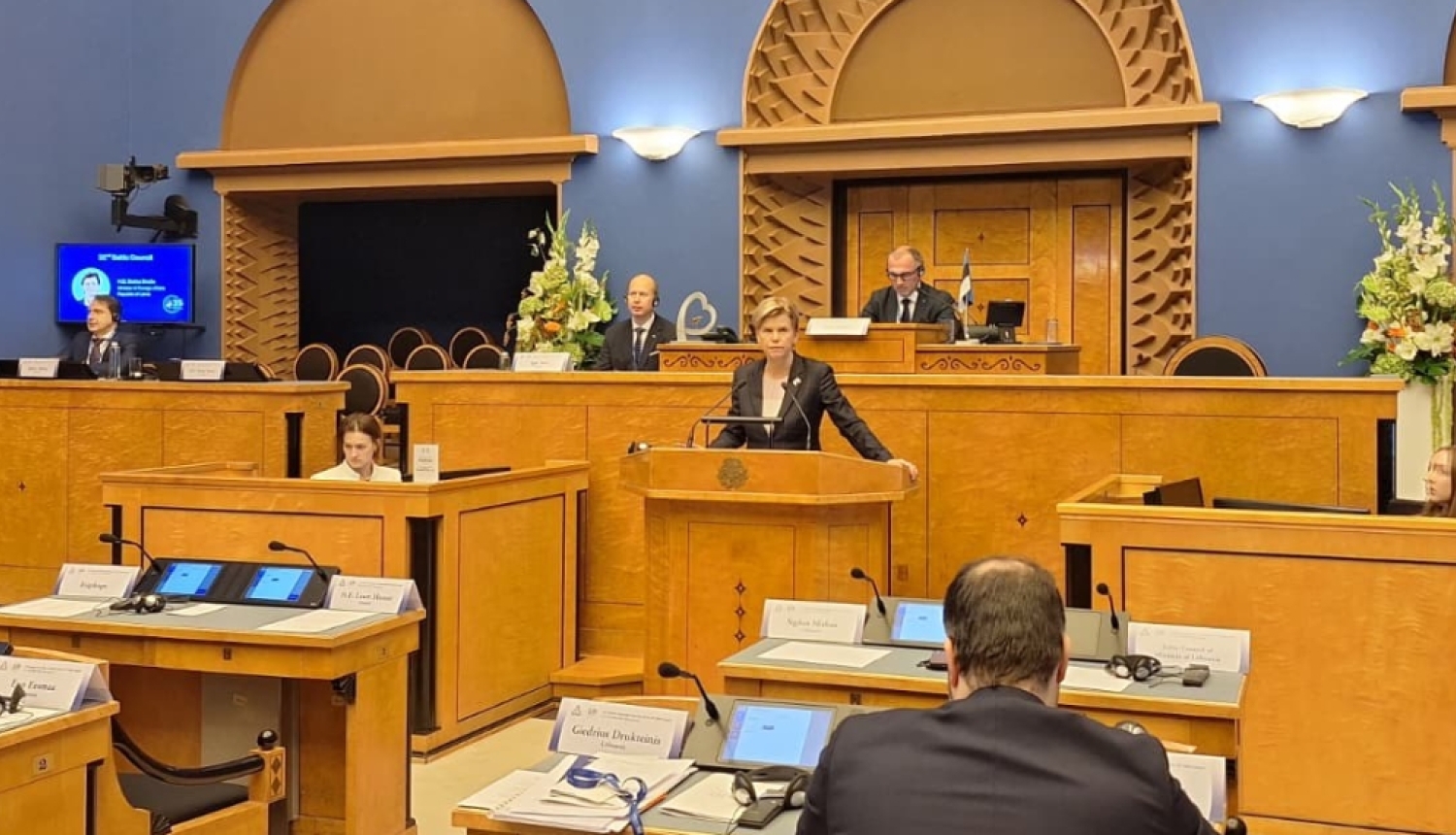
On 23 October 2026, Minister of Foreign Affairs Baiba Braže attended the 32nd Baltic Council in Tallinn, which took place during the 45th session of the Baltic Assembly. Discussions centred on protecting the Baltic states’ borders, countering threats posed by Russia and Belarus, strengthening NATO’s eastern flank and securing EU funding for border regions. The ministers also discussed continued support for Ukraine, regional connectivity and economic security.
“The Baltic states are safeguarding not only their own external borders but also those of the entire European Union and NATO. Their defence is a shared European responsibility; therefore, adequate EU funding must be allocated to strengthen these borders,” Baiba Braže emphasised.
The Minister pointed out that Russia is increasingly using illegal migration via Belarus as part of its military doctrine. Latvia has already prevented more than 12,000 attempts to cross the border illegally this year. Recent incidents on the Latvian–Belarusian border have been particularly aggressive and confirm that migration is being used as a cover for provocations and sabotage.
Baiba Braže expressed her gratitude to Latvia’s border guards, the National Armed Forces and other services, which have been operating under an enhanced regime since August. The Minister also expressed particular gratitude to the Estonian, Lithuanian and Polish border guards for their solidarity and practical support in securing the Latvian–Belarusian border, as well as to all allies for their military presence in the Baltic states.
The Baltic states continue to increase their defence spending significantly and strengthen the presence of NATO allies in the region. Latvia considers the development of air defence and anti-drone capabilities a priority, including by drawing on Ukraine’s combat experience and technology. Transatlantic cooperation with the US and Canada remains one of the cornerstones of the Baltic states’ security.
The Baltic states are also jointly defending the region’s interests in negotiations on the next EU Multiannual Financial Framework. Baiba Braže emphasised that political recognition of the specific security needs of the eastern border must be translated into tangible funding to strengthen borders, military mobility and critical infrastructure. At the same time, sufficient EU funding must continue to be provided for the implementation of the Rail Baltica project.
The Minister reaffirmed the Baltic states’ unwavering support for Ukraine. As Russia intensifies its attacks, it is particularly important to strengthen Ukraine’s air defence and energy resilience, continue providing military assistance and increase sanctions pressure on Russia’s war economy. Latvia will continue to oppose any weakening of sanctions and support efforts to hold Russia accountable.
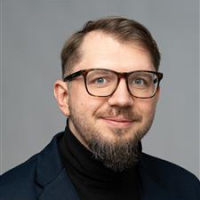
During the visit, Baiba Braže held bilateral talks with Minister of the Interior of Estonia Igor Taro, who represented Estonia at the Baltic Council in the absence of the country’s Minister of Foreign Affairs. The discussion focused on protecting external borders, hybrid threats from Russia and Belarus, the instrumentalisation of migration, and strengthening practical cooperation between the services of the Baltic states.
At the conclusion of the Baltic Council, a joint statement was signed on the achievements of Baltic cooperation in 2026 and priorities for the next year. Baiba Braže also congratulated the Baltic Assembly on its 35th anniversary of its establishment and highlighted its contribution to strengthening security, resilience and connectivity in the region.