
 Flickr
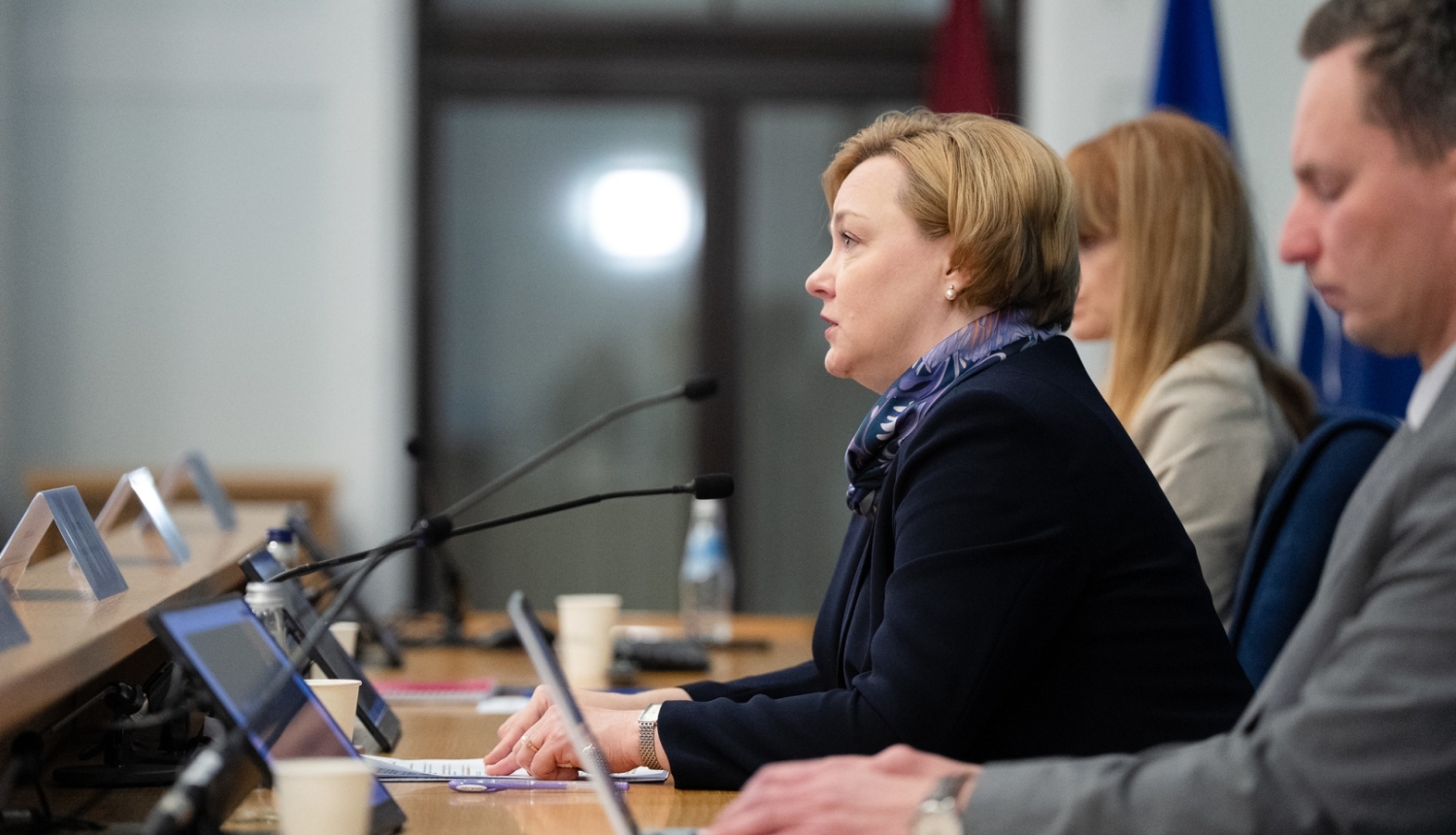
On 25 November 2026, the 18th meeting of the Sanctions Coordination Council took place at the Ministry of Foreign Affairs, bringing together representatives of more than 30 public and private sector institutions. The meeting addressed current issues relating to sanctions policy and the implementation of sanctions. It was chaired by Guna Japiņa, Director of the Legal Department at the Ministry of Foreign Affairs.
“Latvia’s support for Ukraine and its commitment to maintaining pressure on Russia are unwavering and consistent,” Guna Japiņa emphasised in her opening remarks. “Latvia’s position on sanctions policy therefore remains unchanged, and firm sanctions pressure against Russia and its supporters must be maintained. Latvia will also continue to oppose any easing of sanctions.”
As cooperation with Russia and calls for Latvian businesses to end such cooperation remain topical issues, Guna Japiņa reiterated that it is in Latvia’s security interests to reduce economic dependence on Russia, as well as to limit as much as possible Russia’s ability to target the assets of Latvian companies in Russia. The Ministry of Foreign Affairs representative also emphasised the need to agree on a strong 22nd package of EU sanctions against Russia as soon as possible and called on representatives of various sectors to take even more active part in drafting sanctions proposals.
Marta Tilhena, Acting Deputy Head of the Financial Intelligence Unit of Latvia for Sanctions, Gita Neimane, Senior Supervisory Expert at the Compliance Division of the Anti-money Laundering Department, and Atis Pīlāts, Head of the Risk Management Unit at the Customs Department of the State Revenue Service, provided updates on current issues relating to sanctions enforcement. Representatives of the participating institutions concluded that the greatest risks of sanctions circumvention in Latvia are associated with so-called sectoral sanctions, although the resilience of both the public and private sectors to sanctions-related risks has increased.
The authorities responsible for implementing and monitoring sanctions are carefully ensuring that sanctions are complied with, taking into account the presence in Latvia of entities subject to targeted financial sanctions, as well as declining but still ongoing financial flows to Russia and Belarus and to third countries considered high-risk jurisdictions for sanctions. The implementation of even more effective sanctions continues to be hampered by the differing approaches among EU Member States to the implementation of common EU decisions, which increases the administrative burden for Latvian authorities, particularly given Latvia’s position on the EU’s external border.
About the Sanctions Coordination Council
The Sanctions Coordination Council is a consultative body established by the Cabinet with the aim of coordinating the functioning of supervisory institutions responsible for the enforcement of international sanctions and national sanctions of the Republic of Latvia.
The Sanctions Coordination Council is chaired by a representative from the Ministry of Foreign Affairs. The Council membership includes more than 30 public and private institutions.