
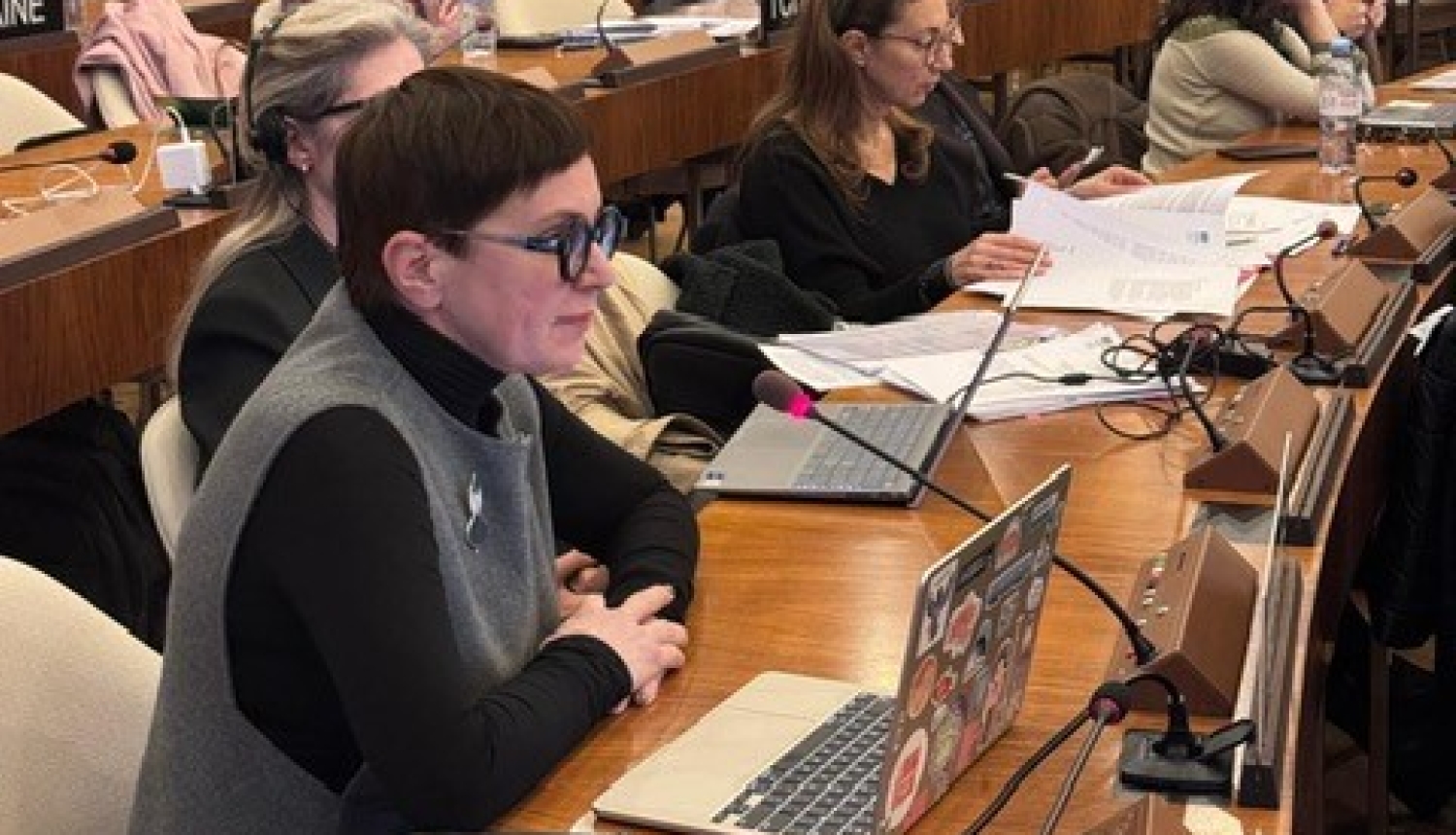
On 19 and 20 November 2026, the 35th session of the Intergovernmental Council of UNESCO’s International Programme for the Development of Communication (IPDC) took place in Paris; the session focused on the safety of journalists, highlighting the growing impunity for crimes against them. Latvia was represented at the IPDC by media expert Rita Ruduša.
During the discussions, Rita Ruduša highlighted the serious threats journalists face in countries affected by armed conflict, where journalists are increasingly falling victim to targeted drone strikes: “The number of journalists killed is rising, while the accountability of states is declining. This combination reinforces, not reduces, impunity.”
During the Council session, Rita Ruduša also drew attention to the substance of Member States’ responses to UNESCO IPDC requests concerning the killings of journalists: “A response in itself does not constitute accountability. We must also assess what states are saying in their replies, and whether their responses genuinely help to protect journalists working in the public interest, or whether they contain disinformation and manipulative claims.”
The Council also discussed how to ensure reliable information during crises, how to reduce gender-based persecution of journalists, and how artificial intelligence is affecting journalism. The Council supported Latvia’s proposal to include a reference to armed conflict in the decision on information resilience during crises, as this poses a particular danger to journalists and hinders access to information of public importance.
Latvia called for particular attention to the safety of women journalists. Of the 14 women journalists killed over a two-year period, 13 lost their lives in areas of armed conflict. According to the latest UNESCO study, 45 per cent of women journalists practise self-censorship. “Just as every journalist killed is not only a tragedy but also a story left untold, every instance of self-censorship resulting from persecution reduces the public’s access to information of public importance,” Rita Ruduša noted.
The number of journalists killed worldwide has risen significantly in recent years, while impunity for crimes against them remains very high and continues to increase. The UNESCO Director-General’s Report on the Safety of Journalists and the Danger of Impunity shows that 189 journalists were killed worldwide in 2024–2025. This is 20 per cent more than in the previous two-year period.
Two-thirds of these, or 127 journalists, were killed in countries experiencing armed conflict, and 50 were killed by drones. Impunity for these crimes has reached a critical level, with 86 per cent of crimes going unpunished. The proportion of states responding to UNESCO’s requests regarding investigations into the killings of journalists has fallen to 62 per cent. By comparison, in 2024, 80 per cent of states responded.
The IPDC, which brings together representatives of 38 UNESCO Member States, is the only multilateral forum within the UN system dedicated to promoting media development; its work focuses on fostering freedom of expression and media diversity, as well as promoting the safety and professional development of journalists. Latvia’s latest term on the IPDC began in 2025, when it was elected to both the IPDC and its executive body, the IPDC Bureau, having secured more votes than Russia in the election.