
 Flickr
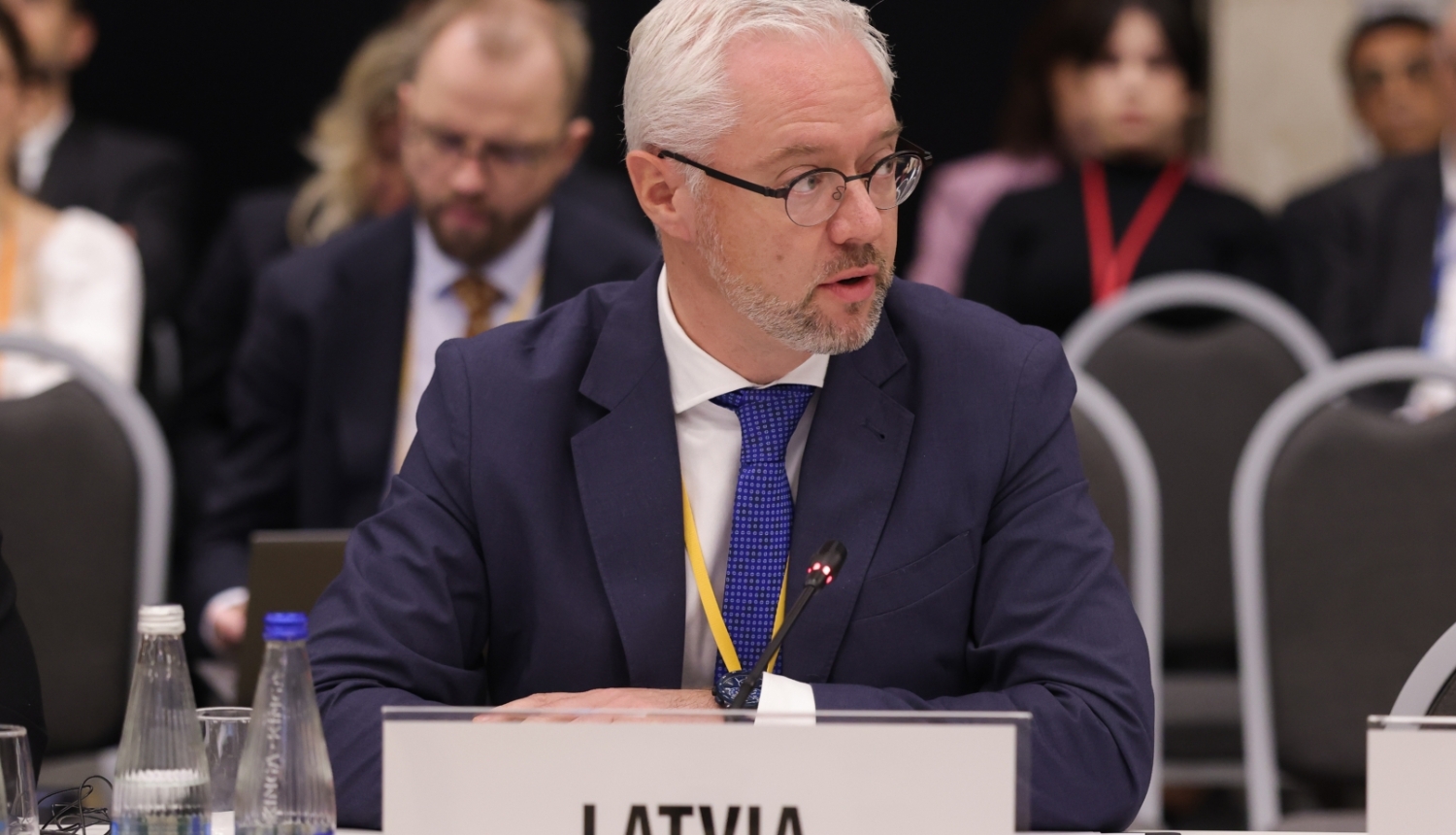
From 5 to 15 October 2026, the Human Dimension Conference is taking place in Warsaw, organised by Switzerland, which holds the chairmanship of the Organisation for Security and Co-operation in Europe (OSCE), and the OSCE Office for Democratic Institutions and Human Rights (ODIHR).
On 14 October, with Latvia’s support, a discussion on the situation in Belarus is held, featuring Ales Bialiatski, Nobel Peace Prize laureate and director of the Belarusian human rights centre Viasna, and Sviatlana Cihanouska, leader of the Belarusian democratic forces and head of the United Transitional Cabinet. Latvia is also co-organising a panel discussion on the OSCE Moscow Mechanism report concerning the indoctrination and militarisation of Ukrainian children in the occupied territories, in which Latvian human rights expert Dr Elīna Šteinerte is also taking part.
The conference events address current issues relating to the rule of law, human rights and political freedoms, as well as the growing transnational repression of journalists, human rights defenders and other opponents. In order to strengthen the rules-based international order, particular attention is paid to the crimes committed by Russia in Ukraine, the situation of political prisoners in Belarus and Russia, and the media freedom and the safety of journalists across the OSCE region.
The thematic events are attended by a wide range of representatives from international organisations, non-governmental groups and human rights organisations.
Background information
The annual Warsaw Human Dimension Conference is held to assess the implementation by countries of OSCE commitments in the human dimension of security. The conference is attended by national delegations, representatives from international organisations and civil society, and human rights defenders.
Since the launch of Russia’s full-scale war of aggression against Ukraine, the official delegations of Russia and Belarus have not been taking part in the conference. Regardless of that, it is possible for the international community to learn from sources on the ground and prominent organisations about the current human rights situation in those countries. During the conference, participants present, listen to and discuss recommendations. Russia’s accountability for violations of international humanitarian law is also widely highlighted.
The event was organised as part of the diplomatic programme supporting the implementation of Latvia’s priorities during its membership of the UN Security Council (UNSC) and to promote Latvia’s visibility. On 3 June 2025, Latvia was elected to the UN Security Council for the term from 1 January 2026 to 31 December 2027. Membership of the Security Council will be one of the most important instruments for safeguarding Latvia’s foreign policy interests. Latvia’s overarching objective during its UN Security Council membership is to safeguard and strengthen an international environment conducive to Latvia’s security, by utilising and, at the same time, expanding the opportunities offered by multilateral diplomacy.