
 Flickr
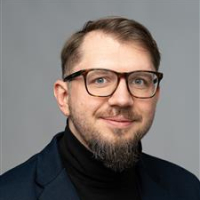
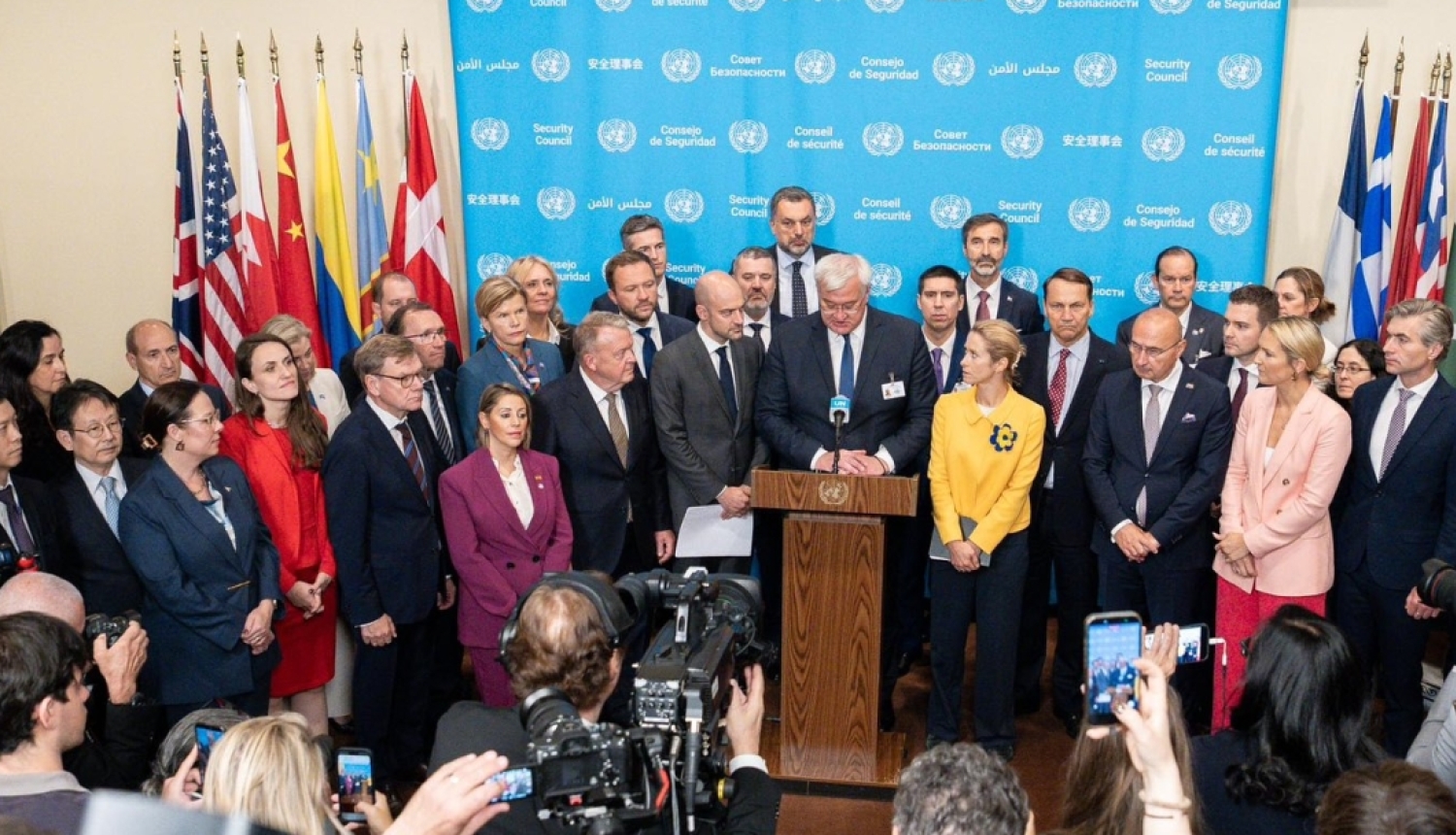
On 21–23 September 2026, the Minister of Foreign Affairs, Baiba Braže, was on a working visit to New York, where, during the High-Level Week of the 81st session of the UN General Assembly, Latvia, as a member of the UN Security Council, used the platform to highlight to the international community the broader consequences of Russia’s aggression against Ukraine, as well as issues directly affecting the security of Latvia and its allies.
Latvia highlighted the Belarusian regime’s support for Russian aggression and the instrumentalisation of migration as part of Russia’s war doctrine, which threatens the EU’s and NATO’s external borders. At a meeting chaired by EU High Representative Kaja Kallas, Foreign Minister Baiba Braže emphasised the importance of security in the Black Sea and Ukrainian grain exports for global food security, particularly in African and Asian countries. Over the course of three days, the Minister participated in several events, including a meeting of the NB8 and Canada, held a number of bilateral meetings, including with the President of the UN General Assembly, and gave interviews to international media outlets, including Fox, the BBC and Bloomberg.
Belarus – part of Russia’s military infrastructure
Latvia, together with the European Union, Estonia, Lithuania, Ireland, Sweden and Ukraine, organised a ministerial-level discussion in New York on the threats posed by Belarus to regional and international security. Participants included Sviatlana Tsikhanouskaya, leader of the Belarusian democratic forces; the Foreign Ministers of Ukraine and Lithuania; the Secretary General of the Council of Europe; and others.
Latvia drew attention to the role of the Belarusian regime in Russia’s aggression against Ukraine and to Belarus’s increasingly close military and industrial integration with Russian structures. At the same time, the regime continues to carry out hybrid attacks against the EU’s and NATO’s external borders by organising instrumentalisation of migration. Since the beginning of the year, more than 11,000 attempts to cross the border illegally have been prevented at the Latvian–Belarusian border alone.
Baiba Braže called on international partners to increase pressure on Russia and Belarus, restrict their economic capabilities and continue the political and diplomatic isolation of both regimes.
Russian attacks in the Black Sea affect global food security
A separate message from Latvia to the UN addressed the consequences of Russia’s war beyond Europe. At a high-level meeting on global food security and the Black Sea, Baiba Braže emphasised that Russia’s attacks on Ukrainian ports, grain infrastructure and civilian shipping directly affect global food availability and prices.
Ukraine is one of the most important food suppliers to the global market, including to countries in Africa, the Middle East and Asia. Disruptions to the Black Sea shipping routes drive up the cost of exports and place additional pressure on countries that depend on food imports.
“Food and freedom of navigation must not become instruments of war. Attacks on civilian ships and Ukraine’s port infrastructure must cease, and commercial shipping in the Black Sea must be safe,” the Foreign Minister emphasised.
Latvia supports a moratorium on attacks in the Black Sea and is simultaneously working to implement stricter checks on the origin of grain to ensure that grain stolen from Russian-occupied territories in Ukraine does not enter international supply chains.
Ukraine’s sovereignty is non-negotiable
At the 6th International Crimea Platform Summit, Latvia reaffirmed its support for Ukraine’s sovereignty and territorial integrity within its internationally recognised borders. Russia’s occupation of Ukrainian territory and attempts at annexation must not be normalised or recognised.
Latvia’s position remains unchanged – a just and lasting peace must be based on the UN Charter and international law, and Ukraine itself must determine the terms of its future and security.
Support for Ukraine also at the centre of bilateral and multilateral talks
In New York, Baiba Braže also participated in a meeting of foreign ministers of the Baltic and Nordic countries (NB8) with the Minister of Foreign Affairs of Canada, Anita Anand. The discussions focused on transatlantic security, continued support for Ukraine and allied cooperation in response to security threats posed by Russia. The Minister also participated in an informal meeting of EU foreign ministers with the foreign ministers of Australia, India, Japan and the Republic of Korea.
The Minister held several bilateral meetings, including with the President of the UN General Assembly, Khalilur Rahman, as well as with officials from Egypt, Singapore, Thailand and the United Arab Emirates. In discussions with partners from various regions of the world, Latvia explained its perspective on the impact of Russia’s war on international security and the need to maintain support for Ukraine.
During the High-Level Week of the UN General Assembly, Baiba Braže also explained Latvia’s position to international media outlets, including Fox, the BBC and Bloomberg. During the visit, the Minister also met with Latvian start-ups and US partners in the fields of technology and innovation.