

 Flickr
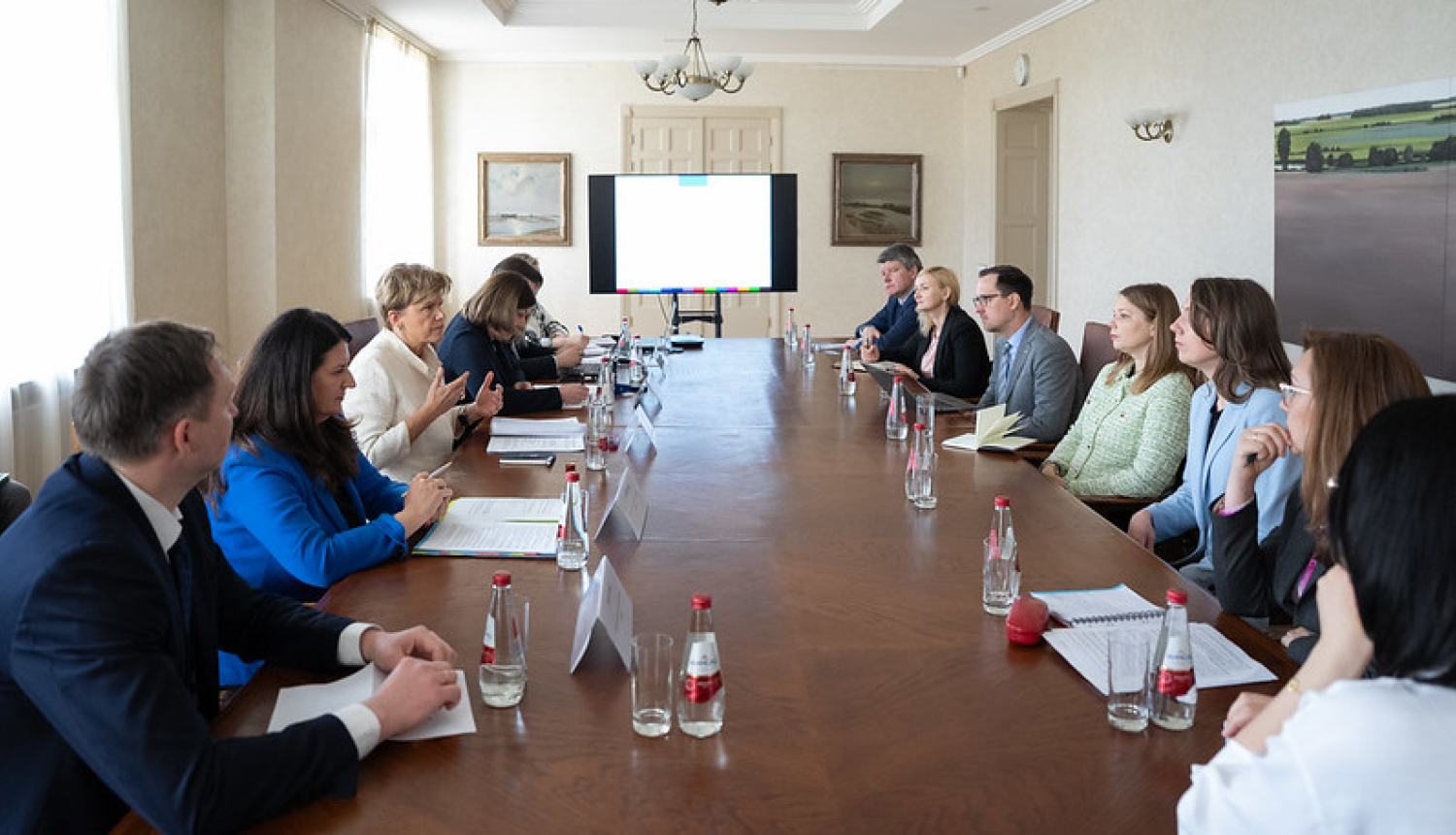
On 15 April 2026, the Minister of Foreign Affairs, Baiba Braže, met with business organisations and representatives of sectoral ministries to discuss the Foreign Service’s support for entrepreneurs in the context of the new EU free trade agreements. The Minister of Foreign Affairs highlighted the opportunities and benefits that trade agreements offer to Latvian companies.
“Today, free trade agreements are not only an economic, but also a security tool – they help Europe become more resilient and less dependent,” the Foreign Minister emphasised during the discussion. “Therefore, the EU is purposefully expanding its network of free trade agreements to mitigate the impact of external economic shocks, ensure stable and resilient supply chains, and protect strategically important sectors of the EU economy.
On 1 May 2026, the EU–Mercosur (Brazil, Argentina, Uruguay, Paraguay) trade agreement will enter into force. The European Commission concluded trade negotiations with Mexico and Indonesia in 2025, as well as with India and Australia in early 2026. The European Commission is also continuing negotiations on trade agreements with the Philippines, Thailand, Malaysia, and the United Arab Emirates.
The EU–Mercosur Agreement will open up new opportunities for Latvian exporters by providing simplified customs procedures and a gradual reduction of tariffs on Latvia's main export products: industrial goods, ICT products (currently subject to tariffs of 14–20%), as well as food products and beverages (current tariffs 10–55%).
The EU–Mexico Modernised Global Agreement, in turn, will further facilitate EU exports to Mexico by setting lower tariffs, particularly on agricultural products. The Modernised Agreement will replace the current Global Agreement, and its signing is scheduled for the first half of May 2026.
An additional strategic benefit for EU and Latvian companies is the agreements reached with India and Australia. The agreement with Australia states that, upon its entry into force, 97.6% of the tariffs applied by Australia to EU goods will be eliminated. This will provide the greatest benefits to companies exporting industrial goods, including chemicals, wood products, and machinery.
The EU–India agreement will create a free trade area with approximately 2 billion consumers and significantly open up the Indian market to EU companies. The sectors that will benefit the most are food and agriculture (current average tariff ~36%), as well as exporters in the chemical (current tariff 22%), pharmaceutical (current tariff 11%), medical device, aviation, and automotive sectors.
The discussion was attended by representatives from the Employers’ Confederation of Latvia, the Latvian Chamber of Commerce and Industry, the Latvian Exporters Association “The Red Jackets,” JSC Grindex, as well as representatives from the Ministry of Economics and the Ministry of Agriculture.