
 Flickr
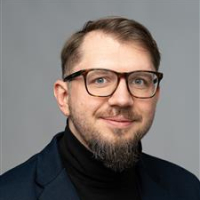
On 12 October 2026, Minister of Foreign Affairs Baiba Braže attended a meeting of the European Union (EU) Foreign Affairs Council, at which the largest-ever package of individual sanctions against Russia was adopted. The Minister called for continued pressure on the aggressor state, including a ban on the transit of Russian grain at the EU level. Baiba Braže met with Andrii Sybiha, Minister of Foreign Affairs of Ukraine, expressing support for Ukraine, and briefed her colleagues on the situation at the Latvian–Belarusian border, emphasising the need to strengthen the security of the EU’s and NATO’s external borders.
During the meeting, the EU’s most extensive package of individual sanctions to date against Russia was approved, covering 1,569 individuals and entities, including individuals and companies linked to Russia’s military-industrial complex. The ministers also adopted sanctions against 77 individuals involved in organising the illegal Russian State Duma elections held in temporarily occupied Ukrainian territories.
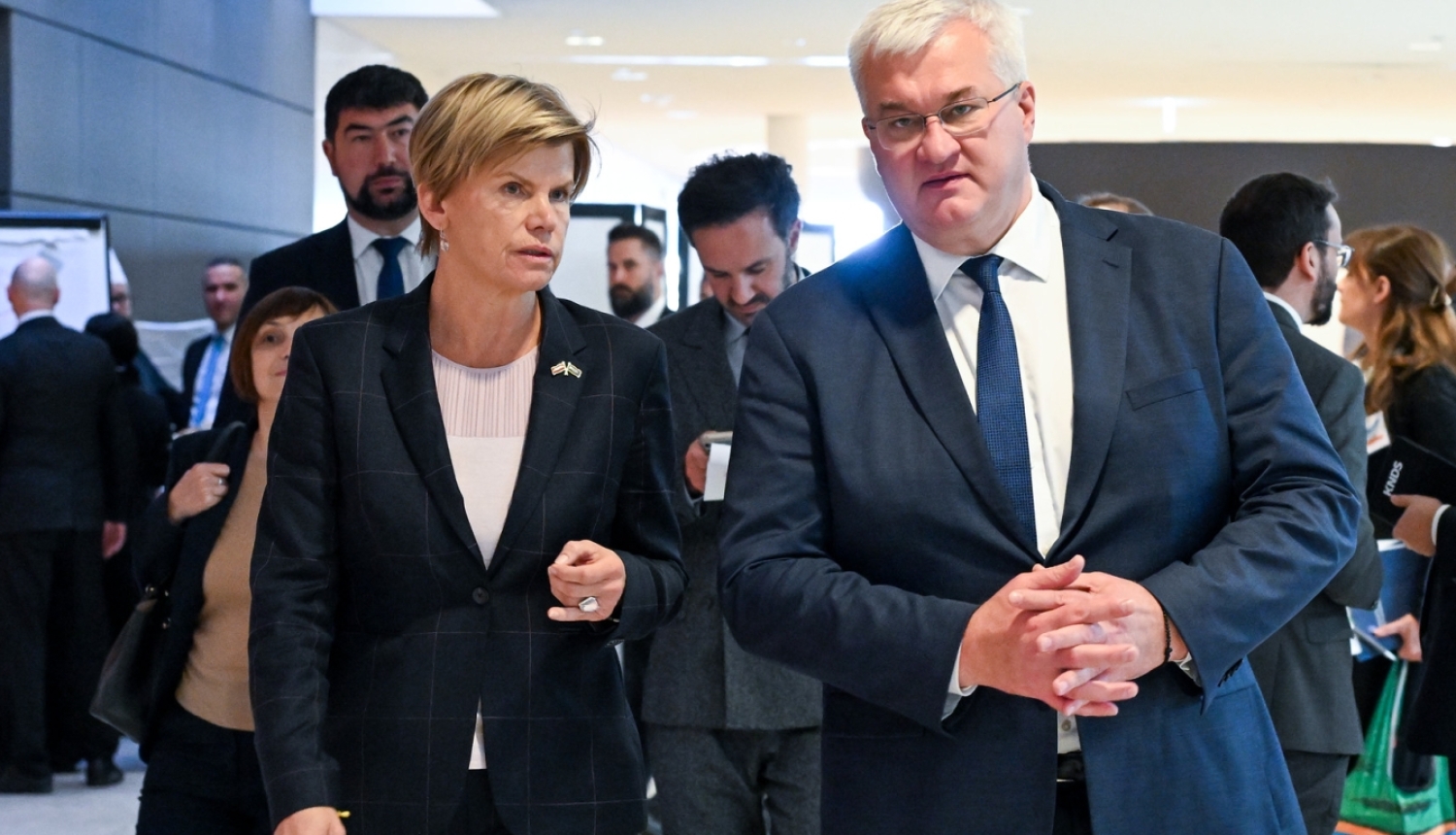
During the EU Foreign Affairs Council meeting in Luxembourg, Baiba Braže also met with Andrii Sybiha, Minister of Foreign Affairs of Ukraine, who expressed his immense gratitude to Latvia for its comprehensive support for Ukraine. The Minister emphasised the need to significantly increase all forms of support for Ukraine, including military, financial, energy and humanitarian aid, ahead of the coming winter. Baiba Braže reiterated her call to EU Member States to agree on a ban on Russian grain imports and transit across the entire EU.
During the discussion on Russia’s war of aggression in Ukraine, Baiba Braže drew attention to the civilian casualties caused by Russian attacks – last week, more than 100 people were killed and hundreds injured. The Minister stressed the need to increase military support for Ukraine, particularly in air defence, and to strengthen the resilience of Ukraine’s energy infrastructure against Russian attacks.
Baiba Braže briefed the ministers on the situation at the Latvian–Belarusian border, highlighting the recent escalation. The Minister reported that several deliberate provocations had been recorded the previous week. In one incident, armed and masked individuals directed at least 20 migrants towards the Latvian border and threatened Latvian soldiers. In another incident, masked individuals cut through the border fence, entered Latvian territory, damaged the power supply infrastructure and stole surveillance cameras.
“This is not just Latvia’s border – it is the external border of the EU and NATO,” the Minister emphasised, calling for increased pressure on Belarus and Russia. Latvia has already prevented around 12,000 illegal attempts to cross the border this year.
Discussing EU enlargement, Baiba Braže emphasised that it represents a strategic investment in Europe’s security. Latvia supports the opening of all accession negotiation clusters with Ukraine and Moldova before the end of this year. At the same time, candidate countries must fully align themselves with the EU’s common foreign policy and its sanctions against Russia and Belarus.
Ministers also discussed the situation in the Middle East, including regional security challenges, the situation in Gaza and the West Bank, and cooperation with the Gulf states. Latvia reaffirmed its support for diplomatic solutions, regional stability and a two-state solution to the Israeli–Palestinian conflict.