
 Flickr
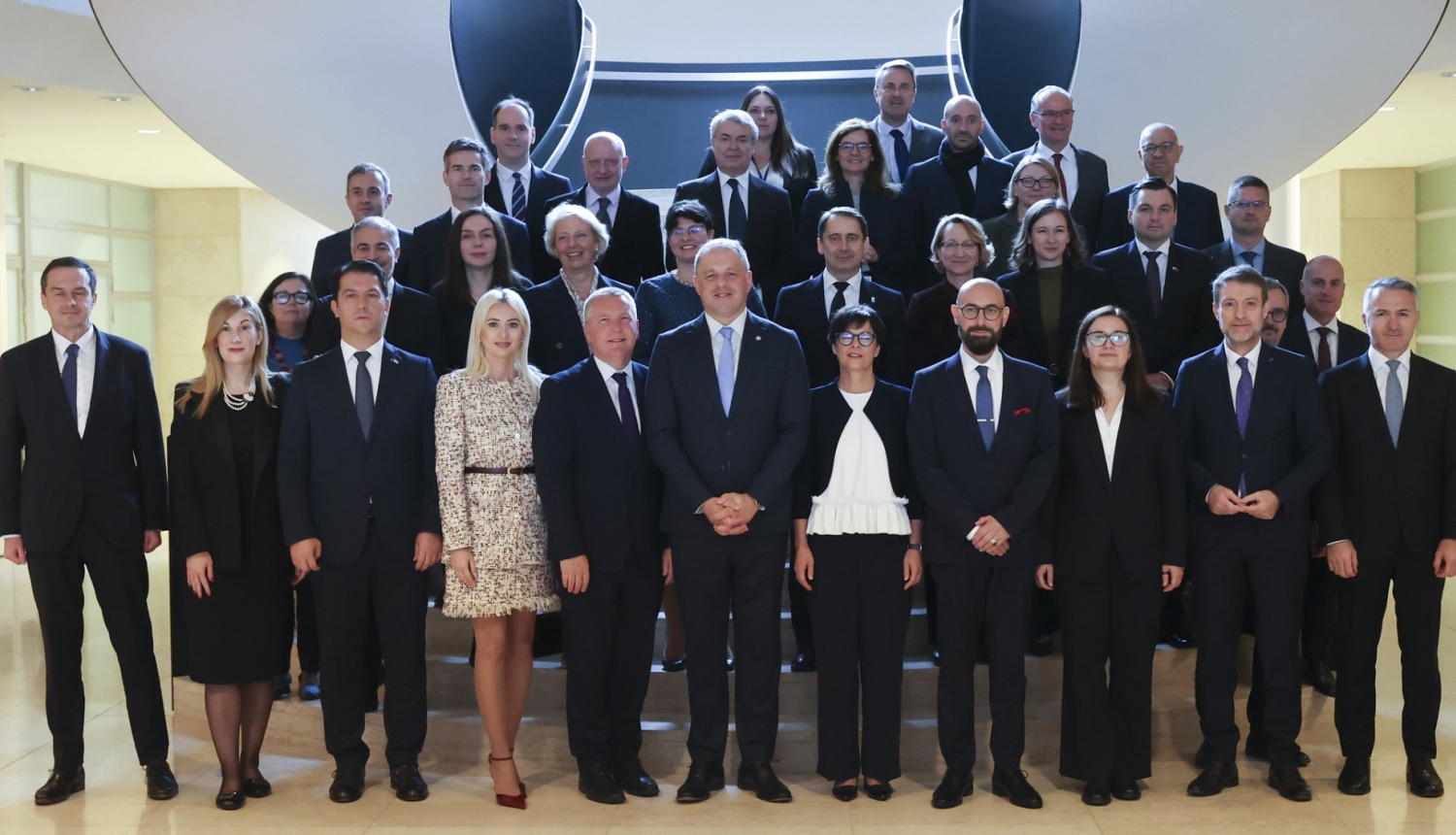
On 13 October 2026, the Parliamentary Secretary of the Ministry of Foreign Affairs, Dace Melbārde, attended a meeting of the European Union (EU) General Affairs Council in Luxembourg. The Council’s agenda included current issues relating to the draft conclusions of the European Council meeting on 15–16 October, the EU Multiannual Financial Framework for 2028–2034, and EU enlargement.
During the discussion on the Irish Presidency’s proposal for the EU Multiannual Financial Framework for 2028–2034, the Parliamentary Secretary stressed the importance of ensuring that Latvia’s priorities are adequately reflected in the budget: maintaining sufficient funding for EU security and defence, allocating additional funding to Latvia as an EU Member State on the EU’s eastern border, addressing the issue of equal direct payments for farmers, and providing sufficient funding for EU connectivity and military mobility, including the implementation of the Rail Baltica project.
“We are in the midst of very complex negotiations on the EU Multiannual Financial Framework. In the Irish Presidency’s revised proposal, we are pleased to note that we have managed to avert cuts to national envelopes, even though a reduction of around 8% in the total budget has been proposed,” Dace Melbārde emphasised. It is important that the EU’s planned support for Ukraine is maintained, whilst cuts are proposed for the EU’s administrative costs, as Latvia has repeatedly requested.
During the discussion on the draft conclusions of the European Council, Dace Melbārde welcomed the largest package of sanctions to date, approved by the Foreign Affairs Council on 12 October, which is targeted at Russia’s military-industrial complex, whilst calling for continued pressure on Russia: “We cannot allow Russia to use EU infrastructure and the internal market to increase its revenues whilst it continues the blockade of Ukrainian products in the Black Sea. The EU should therefore introduce a ban on the transit and import of grain originating in Russia and Belarus.” The European Council’s discussions on 15–16 October will also cover EU competitiveness, including energy prices and trade issues with China, migration challenges, particularly the instrumentalisation of migration, as well as EU enlargement and internal reforms.
During the meeting, a discussion took place on the review of pre-enlargement policy, which sets out more clearly the internal adjustments required within the EU and the commitments expected of candidate countries before accession. On 6 October, the European Commission published a communication on pre-enlargement policy reviews. It is important for Latvia that the European Commission will propose EU accession roadmaps for the four countries that have made the most progress, including Ukraine and Moldova, as well as Montenegro and Albania. It is important that Ukraine and Moldova continue to make progress on their path to EU membership and, on 13 October, opened the next two clusters of EU accession negotiations (Cluster 2 – Internal Market, and Cluster 3 – Competitiveness and Inclusive Growth). Latvia has called for the opening of the last two negotiation clusters with Ukraine and Moldova as soon as possible.