
 Flickr
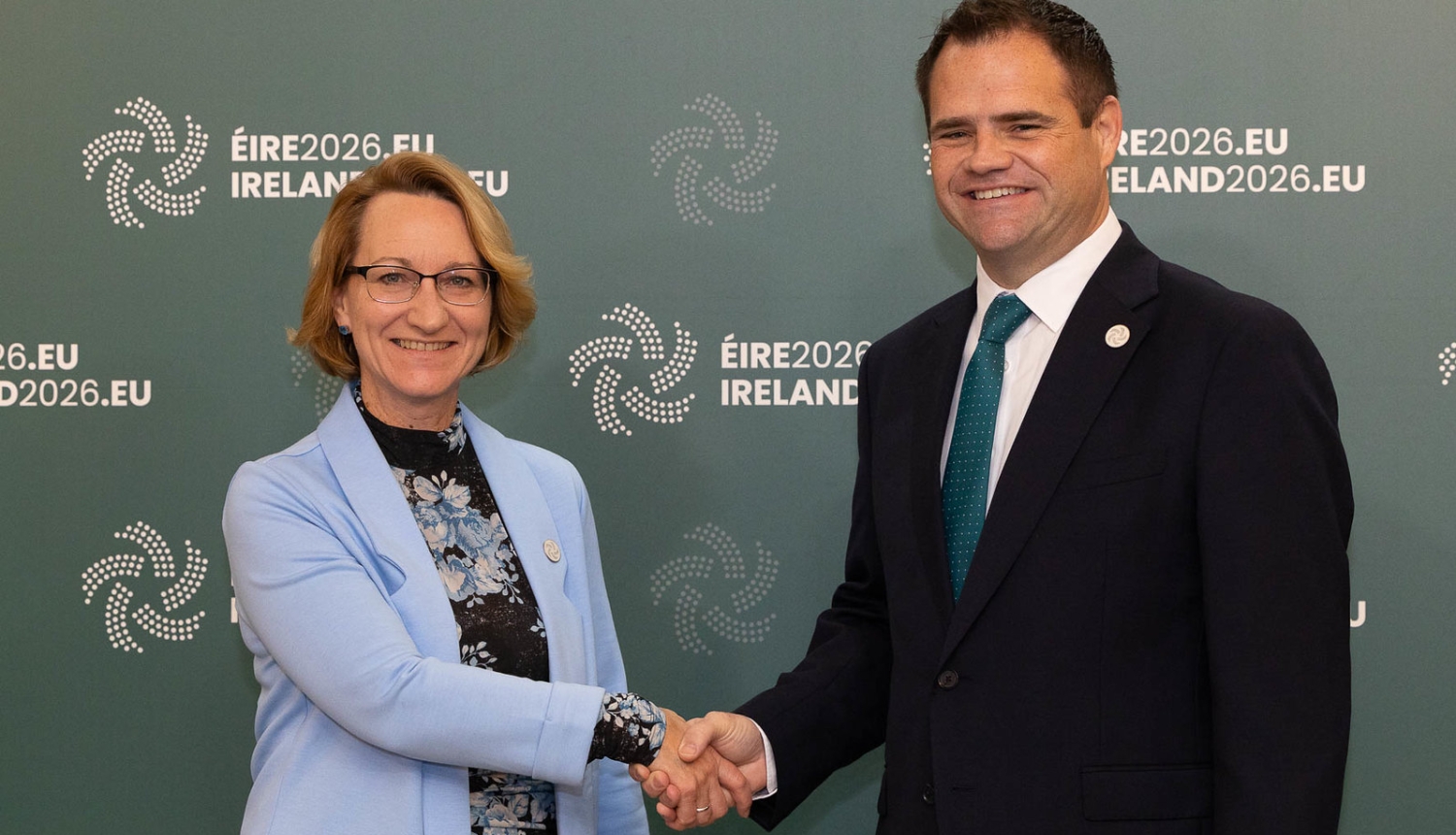
On 8–9 October 2026, an informal meeting of European Union (EU) Foreign Affairs Council of ministers in the development cooperation format took place in Dublin, where Latvia was represented by Dace Melbārde, Parliamentary Secretary of the Ministry of Foreign Affairs. The meeting addressed the future of global development cooperation and current challenges in the field of humanitarian aid, with a particular focus on closer cooperation at an EU and international level, as well as greater involvement of financial institutions and the private sector.
In the discussion on the future of development cooperation, Dace Melbārde emphasised the need to build fair and mutually beneficial partnerships that deliver tangible benefits to partner countries, demonstrate the EU’s added value and, at the same time, contribute to the advancement of the EU’s strategic, geopolitical and economic interests.
“The EU and its partners must work closely together to ensure that both political and financial support have an effective and lasting impact in regions of strategic importance to us. Engagement in Ukraine is an example of how we are able to implement a comprehensive, long-term approach, combining humanitarian aid, development cooperation, support for reforms and the promotion of economic growth, as well as attracting investment,” Dace Melbārde emphasised at the meeting.
The Parliamentary Secretary placed particular emphasis on the importance of civil society in development cooperation, highlighting the contributions of Latvian non-governmental organisations. As examples, she cited the interdisciplinary projects of Riga TechGirls, which combine digitalisation, women’s economic empowerment and the promotion of gender equality in Africa and Central Asia, as well as the work of the MARTA Centre in Ukraine, which strengthens community resilience and provides psychosocial support.
The Member States agreed that, in the context of increasing conflicts and crises, it is important for the EU to strengthen international partnerships and provide humanitarian aid based on EU values and the principles of international law. Discussions with partners highlighted the need to improve the effectiveness of development cooperation in order to promote sustainable development, stability and long-term resilience in partner countries.
The EU Foreign Affairs Council’s development cooperation format addresses issues relating to development cooperation and humanitarian aid. The informal meeting is organised by the country holding the presidency of the Council, currently Ireland. The discussions took place in a broader format, with the participation of representatives from the United Nations, Canada, the United Kingdom, Norway and Iceland, the European Bank for Reconstruction and Development (EBRD), the European Investment Bank (EIB) and the International Rescue Committee.