
 Flickr
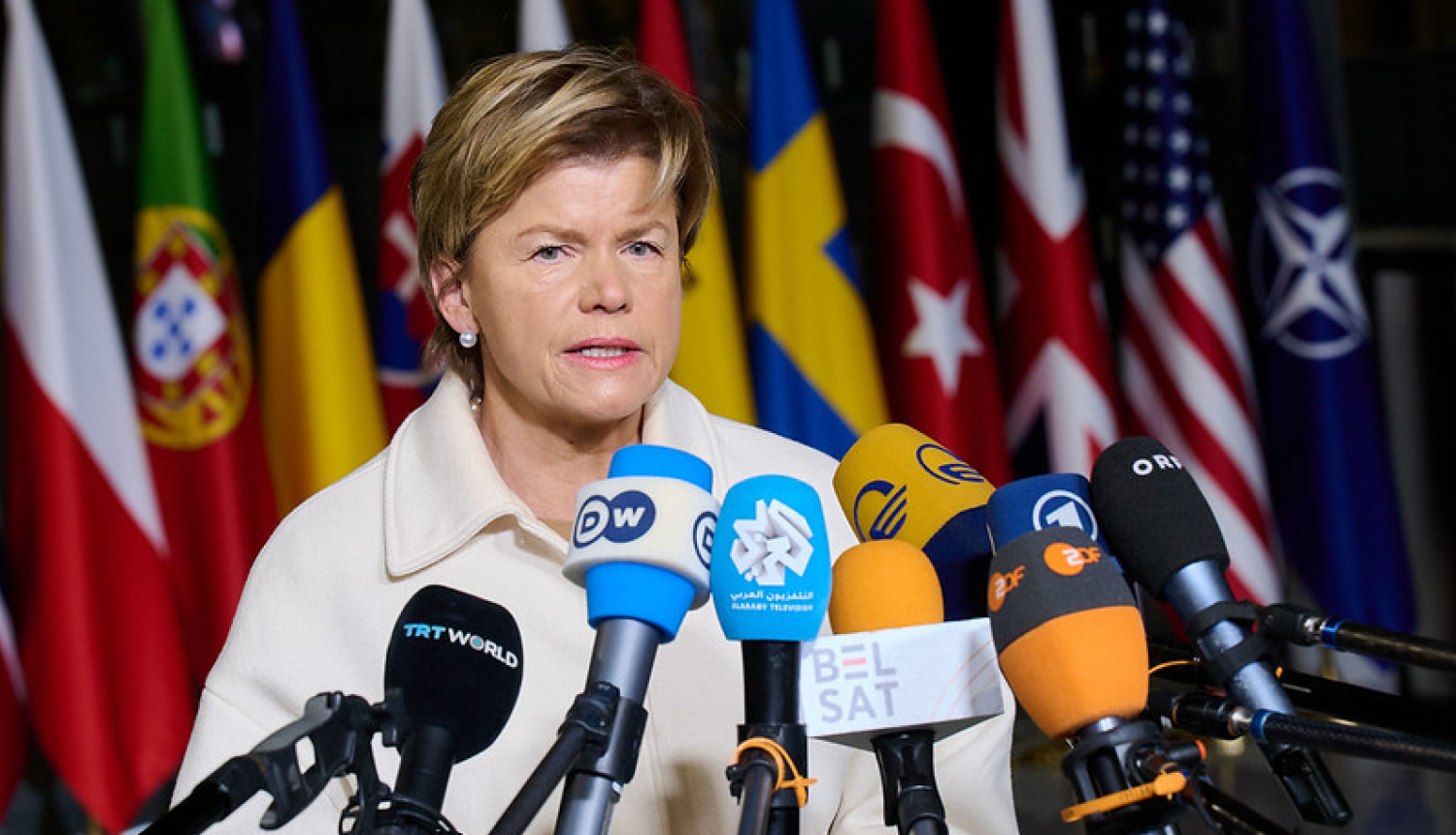
Strengthening the Alliance’s deterrence and defence capabilities, effective responses to Russian hybrid attacks against NATO member states, especially on the eastern flank, continued support for Ukraine’s self-defence, containment of Russia, and preparations for the NATO summit in Ankara, Turkey, were the main topics of discussion at the Meeting of NATO Ministers of Foreign Affairs in Brussels, Belgium, on 3 December 2025.
Minister of Foreign Affairs, Baiba Braže:
“NATO’s mission is to ensure peace in the Euro-Atlantic area – it has succeeded in doing so since the alliance was established in 1949, and this remains the task of all allies in the future. The allies support the US peace efforts, which would ensure lasting and fair peace for Ukraine and strengthen European security.
NATO has agreed that Russia poses the most serious threat to the security of the allies and the transatlantic space. Analysis by the alliance and allied services shows that Russia is preparing for a long-term confrontation with NATO. Russia is constantly testing the allies.
Russia’s goals remain unchanged: to divide NATO allies, reduce support for Ukraine, and undermine US authority in the world, and the aggressor is attempting to do so through so-called peace talks. We must therefore continue to weaken Russia and its economy, ensure that sanctions are effective and not circumvented, and that our deterrence policy remains strong.
All allies must take responsibility for their own security and defence – it is necessary to rapidly implement the NATO Hague Summit decision to allocate 5% of GDP to defence. At the 2026 NATO summit in Ankara, allies will have to be able to demonstrate progress made over the course of the year. Latvia will already reach 4% of GDP in direct defence spending this year, and will increase it to around 5% of GDP in 2026.”
Baiba Braže reported on the progress made in strengthening Latvia’s defence and deterrence capabilities, her recent visit to Ukraine, and Latvia’s continued support for Ukraine in its fight against Russian aggression.
Discussing Russia’s increasingly frequent and aggressive hybrid and sub-conventional attacks on NATO’s eastern flank countries, Baiba Braže praised NATO’s missions – Baltic Shield and East Shield – but stressed that NATO’s presence on the eastern flank needs to be strengthened, especially with air defence and anti-drone capabilities.
At the NATO-Ukraine Council meeting, attended by EU High Representative Kaja Kallas and Minister of Foreign Affairs of Ukraine Andrii Sybiha, coordinated NATO and EU action in support of Ukraine was discussed. Baiba Braže stressed that Latvia will continue to provide military support to Ukraine amounting to at least 0.25% of GDP in 2026 (in 2025, Latvia’s military support to Ukraine will reach 0.3% of GDP). Latvia is also providing EUR 7.2 million in financial support to the NATO initiative to provide Ukraine with urgently needed military equipment (PURL), and is involved in the NATO-led project “Renovator” to support the restoration of medical facilities in Ukraine.
Background information
- Ukrainian President Volodymyr Zelenskyy presents a Ukrainian state award to Foreign Minister Baiba Braže and thanks Latvia for support to Ukraine
- Baiba Braže in a meeting with NATO Secretary General Mark Rutte: the Alliance’s presence in Latvia and on the eastern flank, air defence and anti-drone capabilities must be further strengthened, while maintaining transatlantic unity