
 Flickr
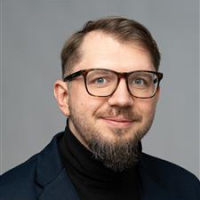
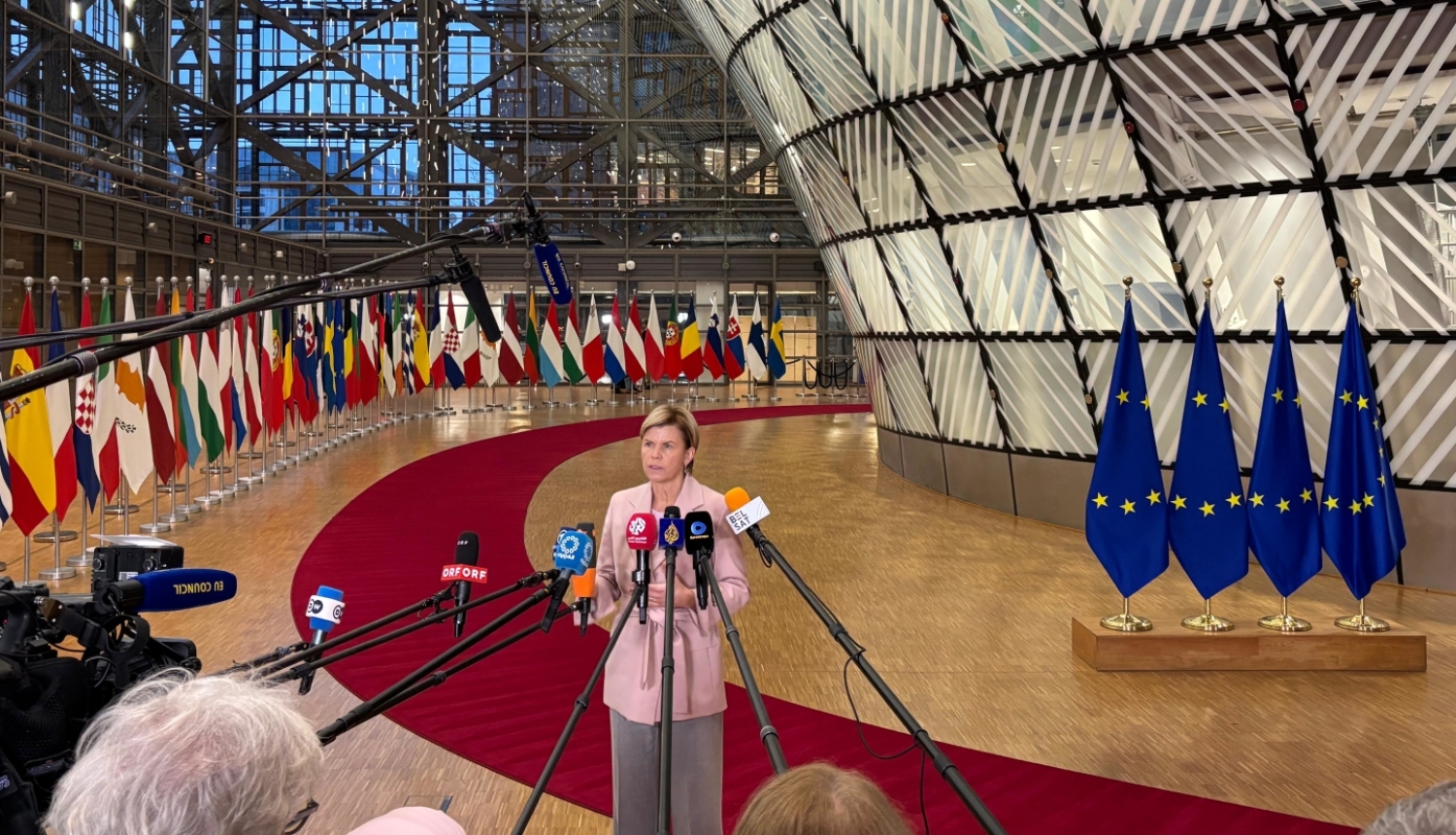
On 16 November 2026, at the meeting of the European Union (EU) Foreign Affairs Council in Brussels, Minister of Foreign Affairs Baiba Braže emphasised that, as Ukraine faces its fifth winter under Russia's aggression, it needs immediate and comprehensive support, particularly to strengthen the resilience of its energy sector and to meet its state budget and defence financing needs. At the meeting, the EU approved the largest single disbursement to Ukraine to date, amounting to nearly EUR 8 billion, and new sanctions against Russia, targeting a total of 151 individuals and legal entities.
The Minister welcomed diplomatic efforts to achieve a just and lasting peace in Ukraine, while emphasising that Russia's actions, not its promises, are what matter. “Russia continues to carry out terrorist attacks against Ukrainian civilians and civilian targets, seeking to achieve what it cannot achieve by military means. There is no indication that Russia wants peace,” Baiba Braže noted.
European countries are united in their view that Russia’s demands regarding European security are absurd. The European approach to the peace talks on Ukraine envisages a clear sequence: a ceasefire, a sustainable peace and firm, long-term security guarantees for Ukraine. Baiba Braže emphasised that Europe, which plays a central role in ensuring Ukraine’s security and stability, must be involved in the negotiations.
The EU has imposed new sanctions on 151 individuals and legal entities, including 113 for financing Russia’s war in the banking, energy and shadow fleet sectors, and 32 for information manipulation and cyber-attacks. Sanctions have also been imposed for financing the terrorist organisation Hamas. Baiba Braže called for the adoption of the 22nd sanctions package to be accelerated, stricter visa restrictions to be introduced, a ban on the import and transit of grain from Russia and Belarus into the EU, and Russia to be prevented from regaining legitimacy in international sport.
Ministers also adopted a decision to allocate the ninth disbursement of EUR 8.04 billion to Ukraine under the Ukraine Plan, following the implementation of 16 out of 18 reform measures. Baiba Braže emphasised that, by the end of 2026, the EU must reach an agreement on funding for Ukraine in 2027 and on the opening of the remaining two clusters of EU accession negotiations. The Minister of Foreign Affairs of Ukraine, Andrii Sybiha, participated in the meeting in person. He provided an update on the current situation in Ukraine, the specific support the country currently requires, and diplomatic efforts to achieve peace.
EU Member States also addressed the growing security threats to European countries. Sabotage and cyber-attacks against European countries have become increasingly commonplace, significantly affecting citizens, businesses and public authorities. The Minister expressed her support for a firm and united EU stance, emphasising that such attacks must not go unanswered and that the EU has the right to respond to them with asymmetric countermeasures.
Ministers also discussed the situation in the Middle East, highlighting the future development of cooperation between the EU and Syria and the parliamentary elections in Israel on 27 October. Baiba Braže commended the progress made by Syria since the fall of the Assad regime and expressed support for the gradual strengthening of relations between the EU and Syria, taking into account Syria’s progress in the areas of human rights, the rule of law, good governance and others. The Minister congratulated Israel on the parliamentary elections and the high voter turnout, and emphasised that it is essential for the EU to engage in a constructive and cooperation-oriented dialogue with Israel following the formation of the new government.
At the second ministerial meeting on interregional security and connectivity, attended by representatives of the Eastern Partnership countries, Central Asian countries and Türkiye, Baiba Braže emphasised the importance of developing security, transport and energy connectivity in the Black Sea region and of closer cooperation with EU partners in strengthening European security, economic resilience and strategic connectivity.
During the meeting, the Minister for Foreign Affairs also held bilateral talks with Minister of Foreign Affairs of Estonia Margus Tsahkna, who awarded her the Estonia's Cross of Merit in recognition of her contribution to relations between the two countries, as well as with Minister of Foreign Affairs of Kazakhstan Mukhtar Tileuberdi, to discuss the expansion of economic cooperation between Latvia and Kazakhstan, particularly in transport, logistics and technology, as well as strengthening relations between the EU and Kazakhstan.