

 Flickr
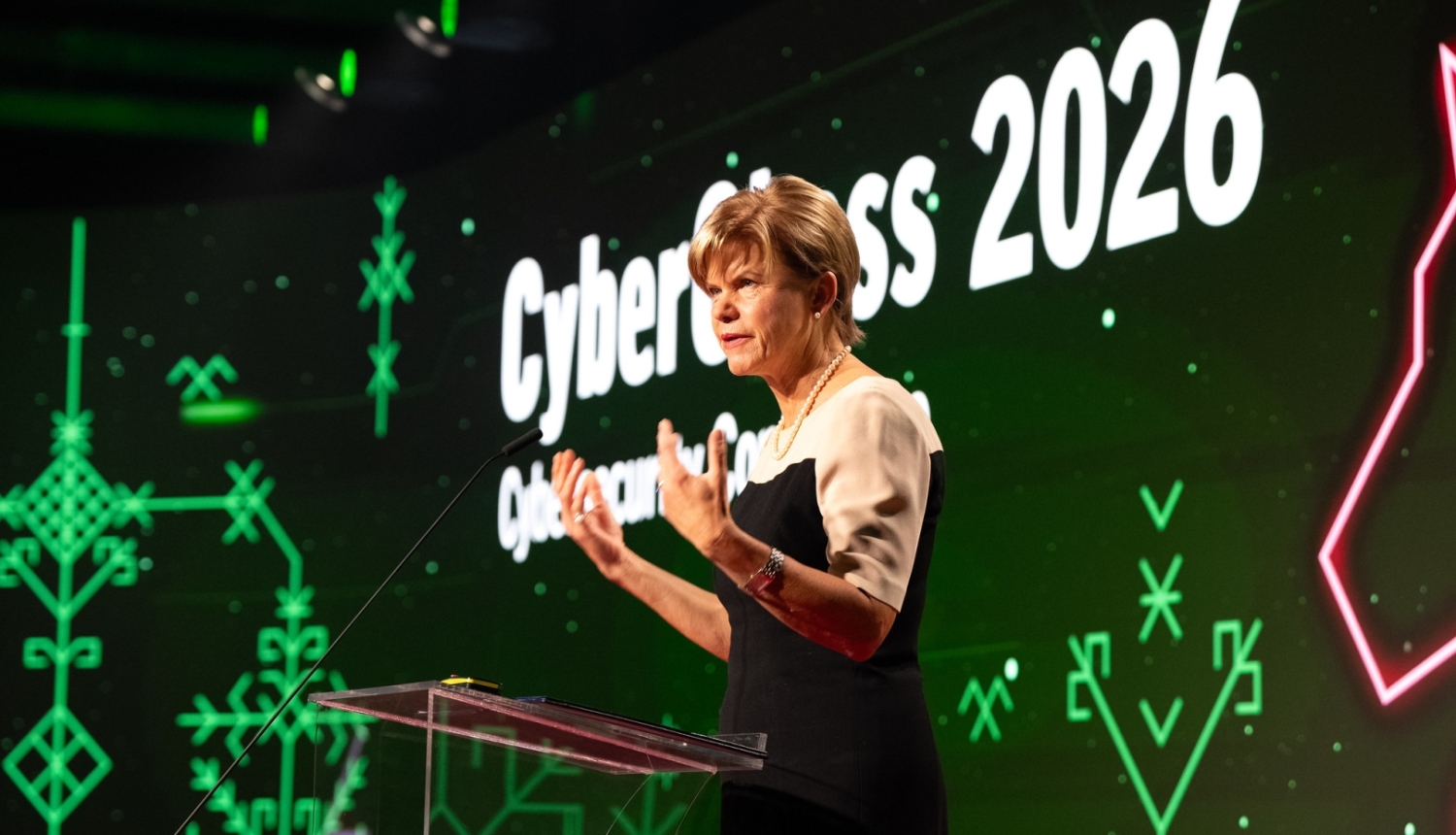
On 14 October 2026, Minister of Foreign Affairs Baiba Braže opened the international cyber security conference “CyberChess 2026”. The Minister emphasised that, in the face of growing cyber threats, technological readiness, the public’s digital skills, institutional resilience and international cooperation must go hand in hand. Russia remains the main source of cyber threats to Latvia and the Nordic–Baltic region, and groups backed by Russia are also making increasing use of artificial intelligence capabilities.
“There is no single front in cyber security – it is everywhere, and it is our first line of defence. Cyber security is the foundation for the continuity of state and business operations and the provision of services essential to society,” Baiba Braže emphasised.
The Minister noted that the scale and intensity of cyber threats continue to grow. Last year, the number of cyber incidents manually processed by CERT.LV increased by 28%, reaching 2,982. The number of compromised devices identified rose by 164% to 1.32 million. The number of fraud cases increased by 54%, whilst the number of DDoS attacks rose by 41%.
Recent attacks on Latvia’s state and critical information technology infrastructure confirm that even a single vulnerability not addressed in time can disrupt an organisation’s operations and lead to data breaches. It is therefore important to analyse incidents, learn from mistakes and put the lessons learnt into practice.
Baiba Braže drew particular attention to the risks posed by artificial intelligence. Autonomous artificial intelligence tools can help identify vulnerabilities more quickly, but, in the hands of malicious actors, they can significantly increase the speed and scale of attacks. Humans must retain control over the operations of artificial intelligence, whilst security checks and independent assessments must become an integral part of the development of these technologies.
At the same time, public awareness and vigilance must be strengthened. Social engineering, identity theft and fraud directly affect the public. In the first half of 2026, Latvian residents lost EUR 7.8 million to financial fraud, or an average of around EUR 1.3 million per month.
The Minister emphasised that Russia remains the main source of cyber threats to Latvia and the Nordic–Baltic region. Russian-backed groups continue to carry out politically motivated attacks on state institutions and businesses, increasingly using artificial intelligence capabilities.
Baiba Braže highlighted the importance of international cooperation. Latvia and Singapore jointly took first place in the NATO cyber defence exercise Locked Shields 2026, while Latvia also worked with Canada to train NATO allies in detecting cyber threats. Publicly attributing cyber-attacks to specific perpetrators and imposing cyber-sanctions are essential tools for holding attackers accountable and ensuring that their actions have real consequences.
Background information
The international cyber security conference “CyberChess 2026” is taking place in Riga on 14 and 15 October, bringing together more than 800 participants from 30 countries. The conference focuses on the use of artificial intelligence in attacks and defence, the resilience of critical infrastructure, cyber crisis management and practical cyber defence methods.
The conference is organised by CERT.LV, the Ministry of Defence, the National Cybersecurity Centre and NIC, the operator of the .lv domain registry, in collaboration with partners from Latvia and the Baltic states. The event is co-funded by the European Union.