


 Flickr
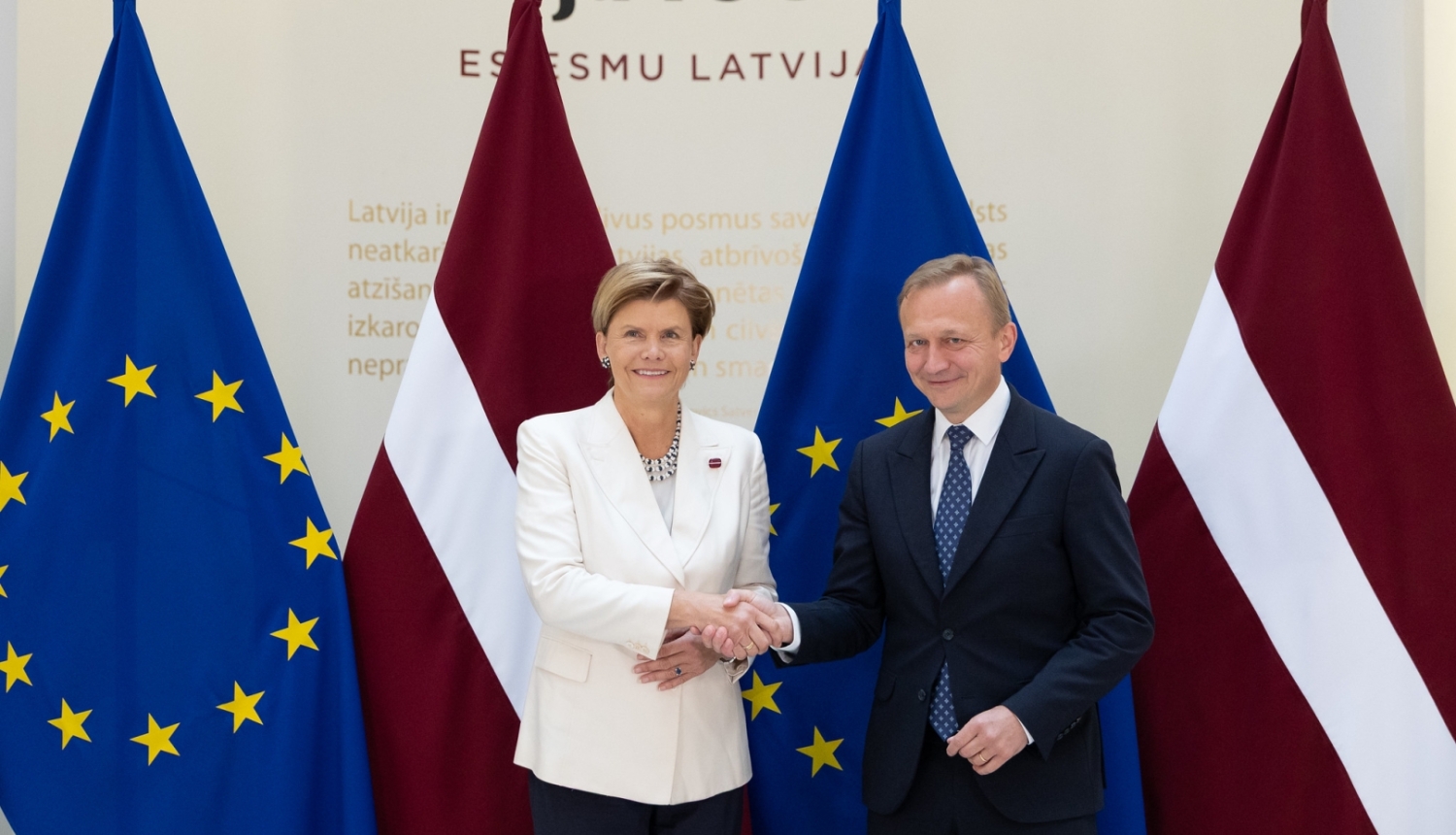
On 12 June 2026, the Minister of Foreign Affairs Baiba Braže, and the Minister of Transport Rihards Kozlovskis, met in Riga with the European Commissioner for Budget, Anti-Fraud and Public Administration Piotr Serafin to discuss Latvia’s priorities in the negotiations on the European Union’s multiannual budget for 2028–2034. The meeting focused on building a common understanding regarding support for security and defence, support for countries on the EU’s eastern border, direct payments to farmers, strengthening competitiveness, and supporting strategic infrastructure.
“It is essential for Latvia that the next EU multiannual budget reflect the new security situation in Europe. Russia’s aggression against Ukraine and the growing threats at the EU’s eastern border require an appropriate response at the European level. In conversation with the Commissioner, I emphasised the need to strengthen support for the EU’s eastern border regions, ensure funding for strategically important infrastructure, and provide direct payments to farmers,” emphasised Baiba Braže.
Meanwhile, the Minister of Transport Rihards Kozlovskis, highlighted the importance of developing strategic infrastructure: “This summer, a decision must be made in the transport sector regarding the future progress of the Rail Baltica project. That is why, during today’s meeting with the European Commissioner for Budget, I pointed out that the European Commission’s continued support is extremely important for the implementation of this project. The CEF (Connecting Europe Facility) must remain the main financing instrument for the project’s implementation. Latvia is located on the eastern border of the EU and NATO, where transport infrastructure plays a critical role in Europe’s collective security.”
During the meeting, the Ministers expressed their appreciation for the European Commission’s initiatives aimed at supporting the EU’s eastern border regions, while noting that existing instruments do not fully reflect the impact of security challenges on economic development, investment attraction, and competitiveness. Baiba Braže emphasised the need to provide targeted support in the next multiannual budget for the Member States bordering Russia and Belarus.
Likewise, special attention was paid to funding for security and defence, including the protection of the EU’s external borders and strengthening resilience against hybrid threats. The Minister of Foreign Affairs noted that investments in the protection of the EU’s external borders are investments in the security of all of Europe, and therefore must also be reflected in the EU budget priorities.
The parties also discussed the need to ensure sufficient funding for the Connecting Europe Facility, including for the implementation of the Rail Baltica project, the development of military mobility, and the strengthening of energy infrastructure resilience.
During the meeting, the Minister of Foreign Affairs emphasised that a fair system of direct agricultural payments is also essential for Latvia. Latvia will continue to advocate for the equalisation of direct payments to ensure equal competition conditions for farmers in all Member States.
During discussions on the establishment of the European Competitiveness Fund, Baiba Braže emphasised the need to establish inclusive eligibility criteria that take into account the challenges of the investment environment in countries directly affected by security threats. In the view of Latvia, the Fund should promote economic growth and innovation throughout the European Union, including in the eastern border regions.
The Ministry of Foreign Affairs reached an agreement on the national position for the EU budget negotiations in consultation with sectoral ministries, associations, businesses, NGOs, and other cooperation partners. Latvia’s priorities in the negotiations on the EU’s multiannual budget for 2028–2034 are sufficient funding for security and defence, additional support for the EU’s eastern border countries, fair direct payments to farmers, funding for strategic infrastructure projects, and strengthening competitiveness across the European Union, with a particular focus on the Member States and regions directly affected by security threats.