

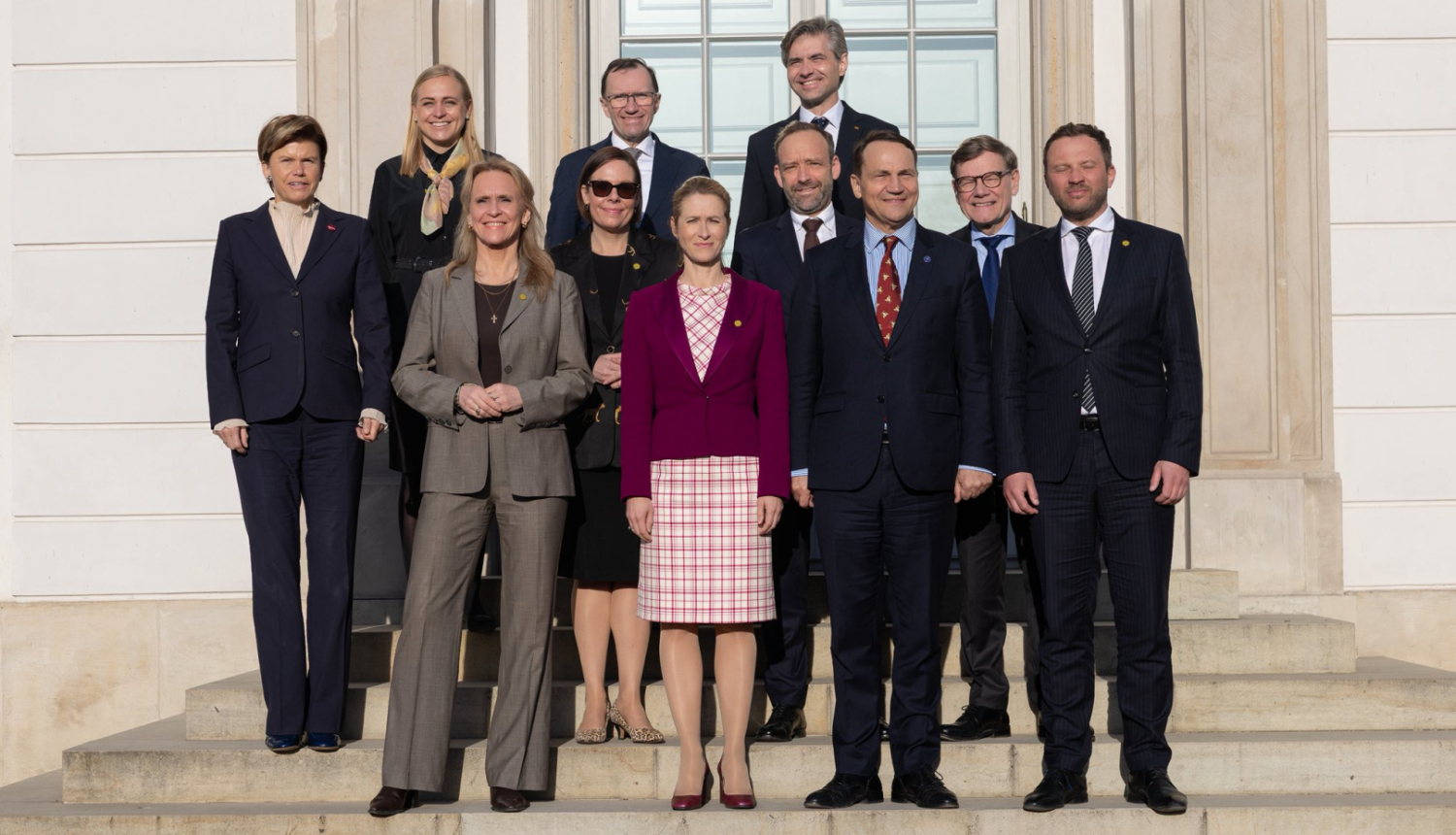
On 4 March 2026, in Warsaw, Poland, the Minister of Foreign Affairs, Baiba Braže, jointly with the ministers of Iceland, Lithuania, Norway, Poland, Sweden, Germany, Finland, Denmark, Estonia, and European Union High Representative Kaja Kallas, participated in a meeting of allied countries of the Baltic Sea region. The meeting focused on the situation in the Middle East, efforts to strengthen NATO’s eastern flank, security guarantees for Ukraine and its European integration, as well as preparations for the NATO Summit in Ankara.
The Minister of Foreign Affairs, Baiba Braže:
“Russia is using hybrid tactics with growing frequency and intensity, in an effort to challenge the Allies. Close and coordinated cooperation among the Baltic Sea countries is the most effective way both to prevent and to respond to threats.
Latvia, like all allied countries of the Baltic Sea region, regularly encounters hybrid threats from Russia, including those posed by its shadow fleet and affecting maritime security, critical undersea infrastructure, the environment, and other areas. Latvia is also frequently confronted with the instrumentalisation of migration at the borders with Russia and Belarus.
Since 2022, Latvia has invested nearly EUR 1 billion in border reinforcement, thereby contributing to the security of the external border of the EU and NATO as a whole. NATO military missions Baltic Sentry and Eastern Sentry are in place, but NATO’s presence in both the Baltic Sea region and along the eastern flank must continue to be reinforced, particularly in air defence and counter-drone capabilities.''
B. Braže also emphasised that at the upcoming NATO Summit, which will take place on 7 and 8 July in Ankara, it is important to demonstrate progress towards the 5% of GDP investment in defence agreed by the Allies last year. The Alliance must be strengthened, modernised, and made more capable of action, in line with the current geopolitical environment.
The Baltic states and Nordic countries are among the largest providers of military aid to Ukraine. While discussing the situation in Ukraine, the Minister stressed that Ukraine requires continuous military and financial support from its allies and urged to address its priority military needs through NATO’s PURL initiative. Latvia has so far contributed EUR 17.2 million to the initiative. B. Braže also highlighted that Ukraine’s European integration is an important factor in the context of peace negotiations and peace guarantees, and that Latvia will continue to offer full support to Ukraine on its path to the EU.
When addressing the situation in the Middle East, B. Braže noted that the priority now is to ensure the protection of civilians and prevent further escalation of the situation. Latvia stands in full solidarity with the Iranian people. Latvia strongly condemns Iran’s unprovoked attacks on countries in the Middle East, which pose a threat to regional and international peace and security.
B. Braže met with Hans Leijtens, the Executive Director of the European Border and Coast Guard Agency, Frontex, to discuss future cooperation in combating the instrumentalisation of migration and illegal migration at Latvia’s external border, which is also the eastern border of the EU and NATO, by Russia and its co-aggressor Belarus. The Minister also met with Aija Kalnāja, Frontex Deputy Executive Director, and other Latvians working at the Agency.
Poland will hold the CBSS Presidency from 1 July 2025 to 30 June 2026.