
 Flickr
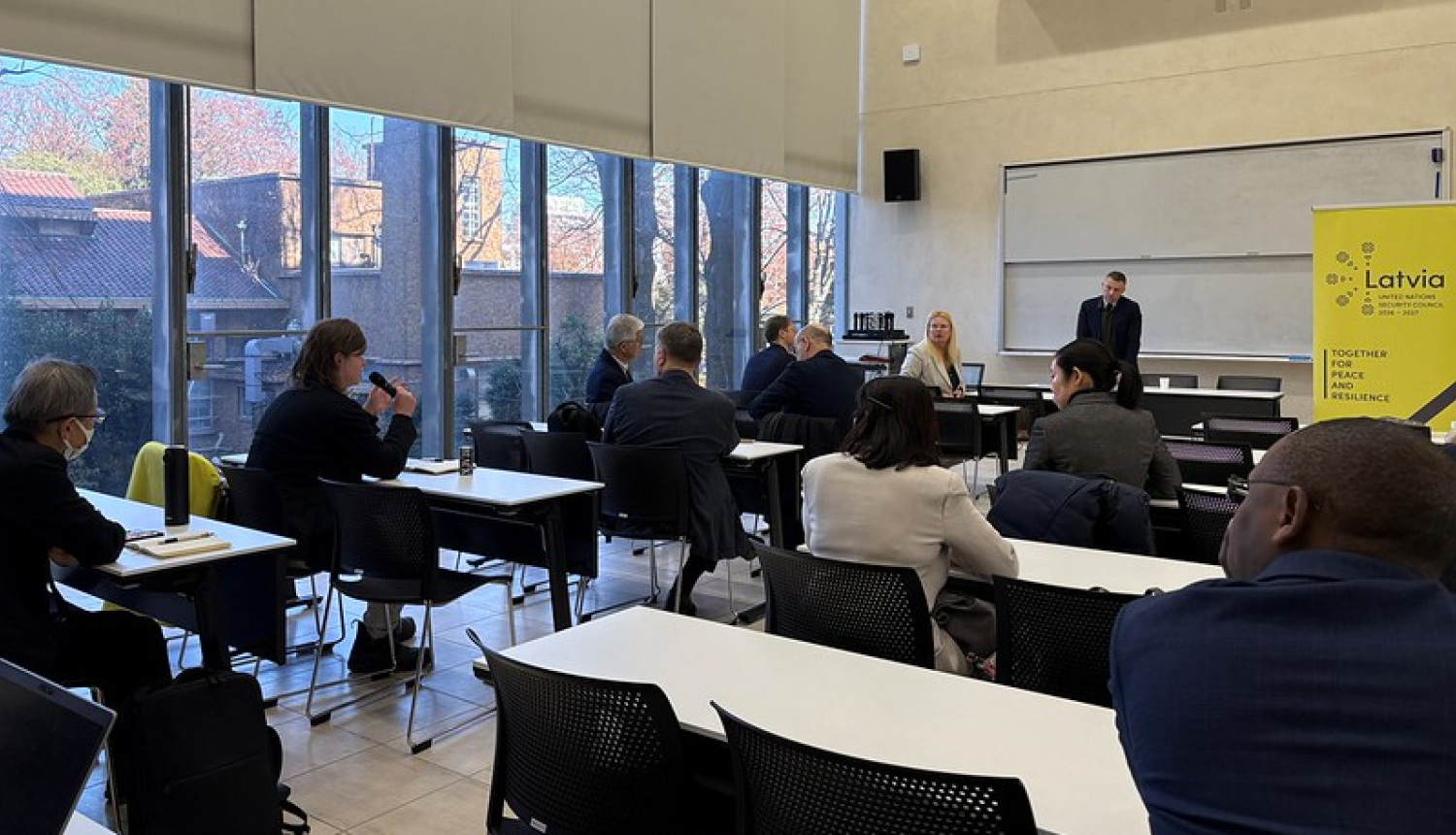
On 5 December 2025, the Embassy of Latvia to Japan, in cooperation with the Research Center for Advanced Science and Technology of the University of Tokyo, organised a seminar on information integrity and societal resilience in the age of artificial intelligence “Promoting information integrity and building societal resilience in the age of AI”. Seminar participants – representatives of the University of Tokyo, students, journalists, experts, and diplomats from Asia, Africa, and Europe – discussed how technological changes affect the ability of governments and civil society to strengthen information integrity and resilience.
At the event, Viktors Makarovs, Special Envoy on Digital Issues at the Ministry of Foreign Affairs, presented Latvia’s experience in combating disinformation and hybrid threats from third countries in the information space. Viktors Makarovs paid particular attention to issues concerning the impact of the increasingly widespread use of artificial intelligence technologies on today’s information environment and called on like-minded countries to cooperate more closely in promoting social resilience and media literacy. He emphasised that Latvia plans to address issues of information integrity and artificial intelligence during its term on the UN Security Council in 2026-2027, closely linking them to other Latvian priorities: the protection of international law, support for Ukraine, and cybersecurity.
During his visit to Tokyo, Viktors Makarovs, accompanied by the Latvian Ambassador to Japan Zigmārs Zilgalvis, met with Junichi Hosono, Director of the Public Diplomacy Strategy Division of the Ministry of Foreign Affairs of Japan, and Kazuyuki Nemoto, Deputy Director of the Economic Diplomacy Strategy Division. The officials concurred that security challenges in Europe and the Indo-Pacific region are similar and agreed on closer cooperation, including in the UN Security Council. The parties also approved on the need to develop reliable artificial intelligence based on human rights.
The event was organised as part of the public diplomacy programme to support the implementation of Latvia’s priorities during its term on the UN Security Council and to promote Latvia’s recognition. On 3 June 2025, Latvia was elected to the UN Security Council for the term from 1 January 2026 to 31 December 2027. Serving as a non-permanent member of the Security Council will be an important tool for ensuring Latvia’s foreign policy interests. The primary objective of Latvia’s membership is to safeguard and strengthen an international environment that supports the security of Latvia while using and enhancing the opportunities provided by multilateral diplomacy.