
 Flickr
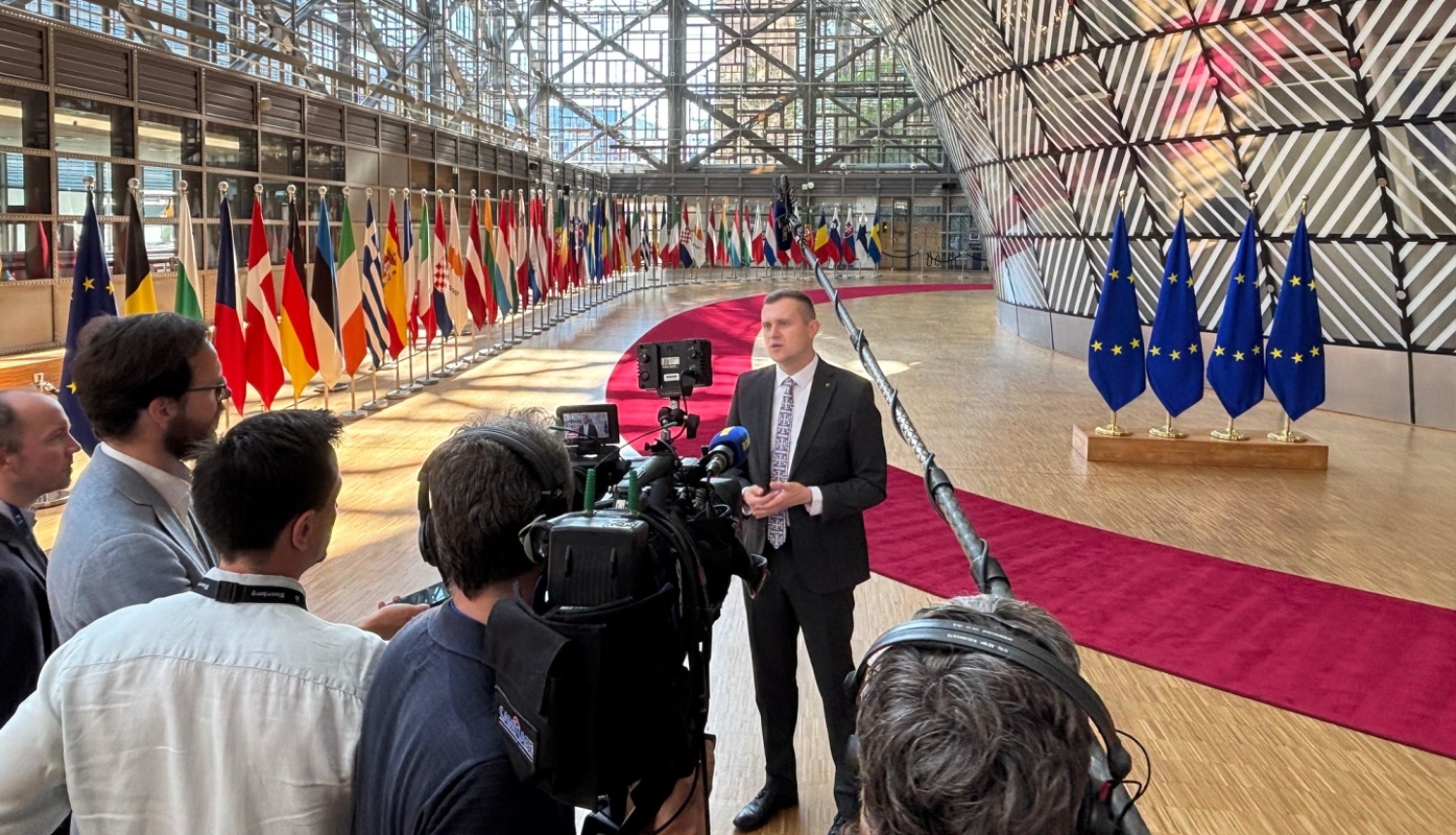
On 22 May 2026, a meeting of the European Union (EU) Foreign Affairs Council on Common Commercial Policy took place in Brussels, Belgium. The Council discussed global trade challenges, with a particular focus on strengthening economic security, the impact of the situation in the Middle East on international trade, and the future of the multilateral trade system.
The discussion on the situation in the Middle East focused on possible next steps to strengthen EU economic security and mitigate the consequences of the crisis in the Strait of Hormuz.
The Parliamentary Secretary of the Ministry of Foreign Affairs, Artjoms Uršuļskis, emphasised:
“In today’s geopolitical context, economic security is not at odds with open trade – on the contrary, they complement each other. The EU must be able simultaneously to strengthen the resilience of supply chains and actively expand cooperation with like-minded and reliable partners in order to mitigate risks and provide our enterprises with new opportunities for growth.”
Attention was also focused on progress in the EU’s trade negotiations with third countries, noting the conclusion of trade negotiations with India and Australia in early 2026. The European Commission is currently continuing negotiations with key EU partners in the ASEAN and Gulf regions, such as the Philippines, Thailand, Malaysia, and the United Arab Emirates. At the same time, the ministers exchanged views on ways to accelerate internal EU procedures in order to advance more effectively the signing and implementation of trade agreements. Latvia welcomed the provisional application of the EU–Mercosur trade agreement on 1 May this year, as well as the signing of the modernised EU–Mexico Global Agreement at the EU–Mexico summit on 22 May.
Ministers also assessed the outcomes of the 14th Ministerial Conference of the World Trade Organization (WTO) (26–29 March in Yaoundé, Cameroon) and exchanged views on WTO reform issues. Given the limited results of the conference, it is essential to maintain an active EU role in the WTO modernisation process and to work towards strengthening the rules-based trading system. The next steps were also discussed, seeking solutions to extend the WTO Moratorium on Customs Duties on Electronic Transmissions.
The meeting approved a Council regulation reducing tariffs for one year on several types of nitrogen fertilisers, as well as on several raw materials required for their production (ammonia, urea), in order to increase trade flows and diversify imports. At the same time, the regulation does not provide tariff concessions for products originating in Russia or Belarus, as they are excluded from the tariff reduction; moreover, other EU restrictions on imports of fertilisers originating in both aggressor states are already in force. As the EU market for fertilisers and their raw materials is heavily dependent on imports from third countries, the regulation will help diversify imports and strengthen the competitiveness of European agriculture, opening up opportunities for Latvian and EU farmers to purchase fertilisers at lower prices.