
 Flickr
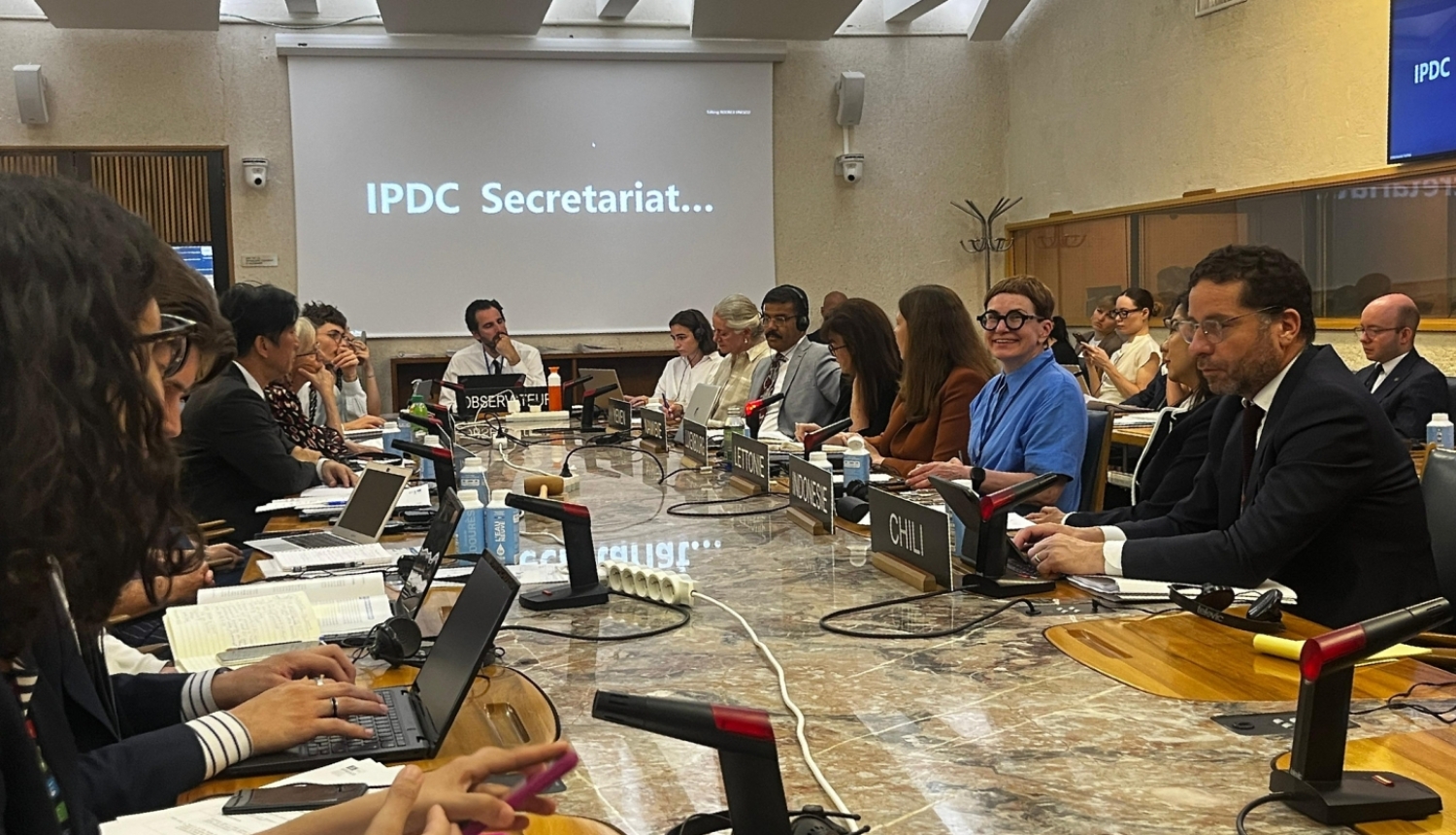
On 18 June 2026, a meeting of the Bureau of the Intergovernmental Council of the International Programme for the Development of Communication (IPDC) was held in Paris, France, where participants discussed strengthening media sustainability, journalist safety and combating gender-based persecution of journalists.
Latvia was represented by media expert Rita Ruduša. She emphasised that journalists working in frontline regions and on the frontline – particularly in Ukraine – face acute threats to their health and lives, as well as online harassment, and are increasingly becoming deliberate targets of the aggressor’s attacks.
Rita Ruduša: “The specific nature of drone warfare in Ukraine forces us to rethink what we mean by “journalist safety”. Journalists are not merely caught in the crossfire; they are being deliberately targeted. The language of the UNESCO report must reflect the gravity of the threats, and combating impunity is particularly important in the current circumstances.”
The Bureau reaffirmed the IPDC’s commitment to combating impunity for crimes against journalists. The IPDC will hear the latest report on the safety of journalists at its meeting in Paris on 19–20 November this year.
Latvia proposed that future IPDC discussions also focus more closely on the impact of artificial intelligence on journalism, particularly in the context of safety. “The role of disinformation in creating biases in artificial intelligence has rightly been characterised as a negative phenomenon, but, in the context of the safety of female journalists, gender-based biases – which are perpetuated by artificial intelligence, creating additional threats to the safety of female journalists – are also a pressing issue,” noted Rita Ruduša.
The IPDC Bureau allocated more than EUR 1 million to projects implemented by 38 media organisations in various countries around the world, including three in Ukraine. The projects are aimed at strengthening community media capacity, ensuring the safety of female journalists, reinforcing press freedom and promoting media sustainability and pluralism. Among the approved projects was targeted support for female journalists in conflict regions, including Kharkiv, Dnipro and Zaporizhzhia, which have been subjected to intense Russian shelling.
This was the first time that Latvia’s representative, Rita Ruduša, participated in a meeting following Latvia’s election to the IPDC’s decision-making body in 2025. Last November, Latvia won the election for a seat on the IPDC by a convincing majority, defeating Russia. The Bureau comprises representatives from eight of the 38 IPDC member states; it also makes decisions on allocating funding to newsrooms in low-income countries and agrees on the focus of UNESCO reports on the safety of journalists.
UNESCO (United Nations Educational, Scientific and Cultural Organization) is an international organisation that brings together 194 countries committed to the fields of education, natural sciences, social sciences and humanities, culture, communication and information. Latvia joined UNESCO in 1991.