 Flickr
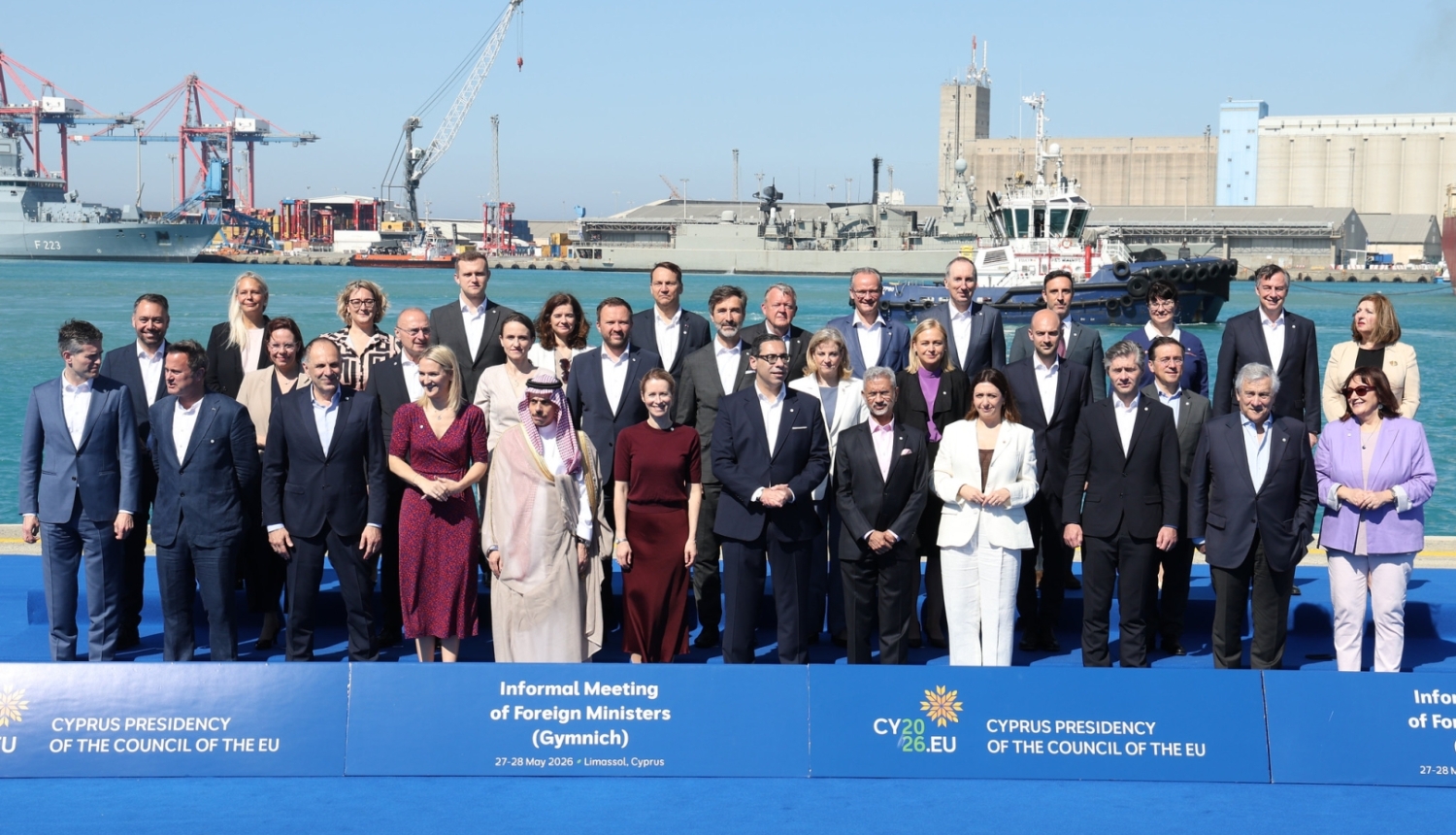
On 27 and 28 May 2026 in Limassol, Cyprus, the Parliamentary Secretary of the Ministry of Foreign Affairs, Artjoms Uršuļskis, emphasised at the informal meeting of European Union (EU) foreign ministers, known as the Gymnich meeting:
“Russia is growing weaker both economically and militarily and has failed to achieve its objectives in Ukraine. That is why it is now trying to destabilise Europe through drone attacks and disinformation campaigns, including those we are facing in the Nordic and Baltic regions. The EU must therefore be resolute and united in responding to these threats. Pressure on Russia must continue through restrictive measures, including sanctions. A strong 21st sanctions package against Russia must be adopted. Ukraine is now in a better position on the battlefield than in previous years. This creates opportunities to step up support for Ukraine in all areas, particularly in the security sector. Likewise, all clusters of the accession negotiations with Ukraine must be officially opened without delay. “Ukraine's military capabilities and rapidly developing defence industry are essential to the security of Latvia and Europe as a whole.”
Artjoms Uršuļskis noted that the presidents of the Baltic states, in a joint statement, strongly condemned Russia's disinformation campaigns and threats, reaffirming their commitment to NATO and solidarity with Ukraine, and thanked partners for their support for the Baltic states, as expressed by senior EU officials, foreign ministers and other officials from many EU and NATO member states.
The Parliamentary Secretary reported that Latvia’s total (state and public) support for Ukraine between 24 February 2022 and 20 February 2026 reached at least EUR 1.08 billion, or 0.6% of GDP (2022–2025). It includes military aid to Ukraine – EUR 675 million, humanitarian aid and support to the Ukrainian government – EUR 92 million, support for Ukrainian civilians in Latvia – EUR 304 million, support for reform, development and reconstruction – EUR 17 million.
During discussions on the EU interests and policy toward Russia, particularly as it intensifies hybrid attacks on Europe, ministers discussed options for increasing pressure on Russia, as well as diplomatic efforts towards a just and sustainable peace in Ukraine and the EU’s role in future peace negotiations. Artjoms Uršuļskis emphasised: “The EU’s policy towards Russia depends to a large extent on how negotiations for a just and lasting peace in Ukraine unfold. As long as Russia continues its war of aggression in Ukraine, Latvia considers any changes in relations with Russia outside of the framework of these negotiations unacceptable. With regard to the peace talks, the European Union must be represented and must take decisions on issues essential to its security.”
“To achieve a lasting and just peace in Ukraine, the EU must continue supporting Ukraine, including through reconstruction efforts, strengthening its military and defence capabilities, and accelerating its integration into the EU. The EU must continue its diplomatic efforts aimed at achieving an immediate ceasefire, further isolating Russia and reducing its global influence. Russia must be held accountable,” Artjoms Uršuļskis noted. Discussing the issue of establishing the Special Tribunal for the Crime of Aggression against Ukraine, the Parliamentary Secretary welcomed the resolution adopted on 15 May 2026 during the 135th Session of the Committee of Ministers of the Council of Europe establishing the Enlarged Partial Agreement. Artjoms Uršuļskis emphasised that this marks an important step towards the establishment of the Special Tribunal. Latvia, together with the other NB8 countries, was one of 36 countries that voted in favour of the resolution.
The Minister of Foreign Affairs of Ukraine, Andrii Sybiha, also participated in the meeting of EU foreign ministers.
Discussing the regional impact of the crisis in the Middle East, Artjoms Uršuļskis noted that EU cooperation with the Gulf States, as well as with countries in the Indo-Pacific region, must be strengthened.
The Parliamentary Secretary emphasised: “Blocking the Strait of Hormuz or imposing tolls for its use is illegal and unacceptable. Freedom of navigation in the Strait of Hormuz must be ensured, and the free flow of goods restored.” Artjoms Uršuļskis highlighted that Latvia advocates for deepening the dialogue between the EU and the Gulf region and promoting cooperation in areas of mutual interest and benefit, including preparations for this year’s joint summit in Riyadh, Saudi Arabia. “Iran’s destabilising activities in the Persian Gulf and its support for Russian aggression against Ukraine demonstrate that these conflicts are not isolated but pose a threat to stability in Europe, the Persian Gulf and globally,” the Parliamentary Secretary of the Ministry of Foreign Affairs noted.
In the exchange of views on the regional impact of the crisis in the Middle East, EU foreign ministers met with India’s External Affairs Minister, Subrahmanyam Jaishankar, and the Minister of Foreign Affairs of the Kingdom of Saudi Arabia, Prince Faisal bin Farhan Al Saud.