
 Flickr
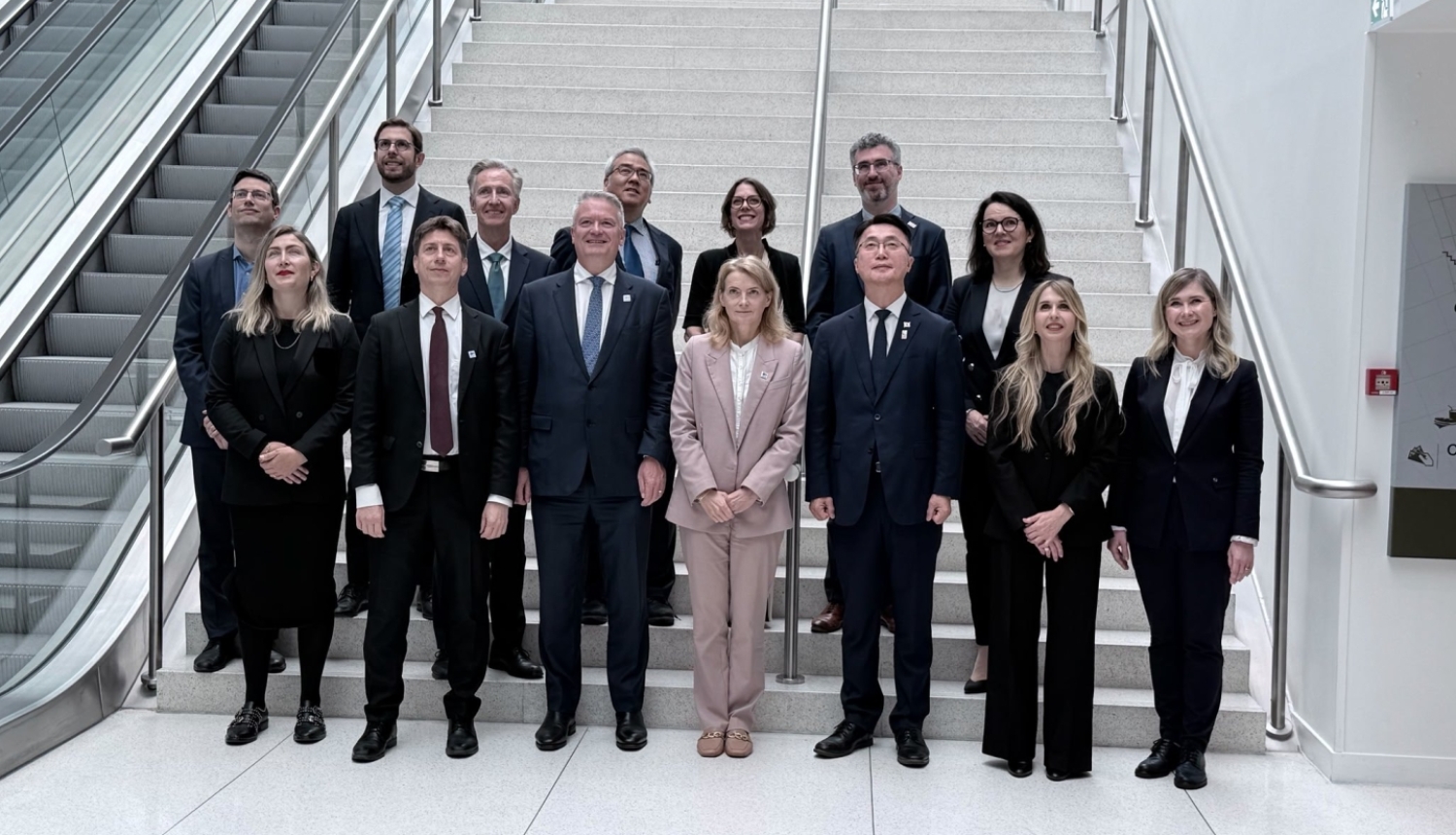
On 2 June 2026, during the OECD Ministerial Council Meeting in Paris, a high-level event titled “International Co-operation for the Second Quantum Revolution” was held to discuss the development of quantum technologies, their applications, and their socio-economic impact.
Dr.-Ing. Maira Indrikova, Vice-Rector for Research at Riga Technical University (RTU), participated in an expert discussion on quantum technology policymaking. Together with representatives of the International Council of Quantum Industry Associations, Japan’s Global Research and Development Center for Business by Quantum-AI technology (G-QuAT, AIST), and Singapore's Ministry of Digital Development and Information, the Latvian representative discussed research and innovation funding, the availability of technology and a highly skilled workforce, and supply chain security.
Maira Indrikova presented Latvia’s achievements in the quantum technologies, including quantum communication, sensors, and algorithms, and described Latvia’s dynamic quantum ecosystem, which includes academia, the private sector and government. To strengthen excellence in the quantum sector, Latvia continues to expand and formalise cooperation with like-minded countries. Maira Indrikova particularly emphasised the importance of collaboration among like-minded countries in training a new generation of quantum scientists and engineers as a mutually beneficial process. It is essential for educational and research institutions, government bodies and industry to work in unison in the field of quantum technologies, with all stakeholders recognising their shared responsibility for the safe development and application of these powerful technologies.
Quantum technologies have dual-use applications, where both agreement on political and ethical guidelines and a high degree of responsibility among all parties involved are essential. It is particularly important to align technological development and innovation with the protection of democratic values, human rights, and fundamental values. To this end, the OECD has developed Council Recommendation on Quantum Technologies, which is scheduled to be adopted during the OECD Ministerial Council Meeting, held from 2 to 4 June.
The high-level discussion in Paris was opened by Mathias Cormann, Secretary-General of the OECD, and Sakari Puisto, Finald's Minister of Economic Affairs; at the conclusion, participants were addressed by Yasushi Masaki, Deputy Secretary-General of the OECD. The event was organised by the OECD Global Forum on Technology with support of Finland, Japan, Korea, and the United Kingdom.
The OECD was founded in 1961 and brings together the world’s most technologically and industrially advanced democratic countries. Latvia officially became the 35th member of the OECD on 1 July 2016.