



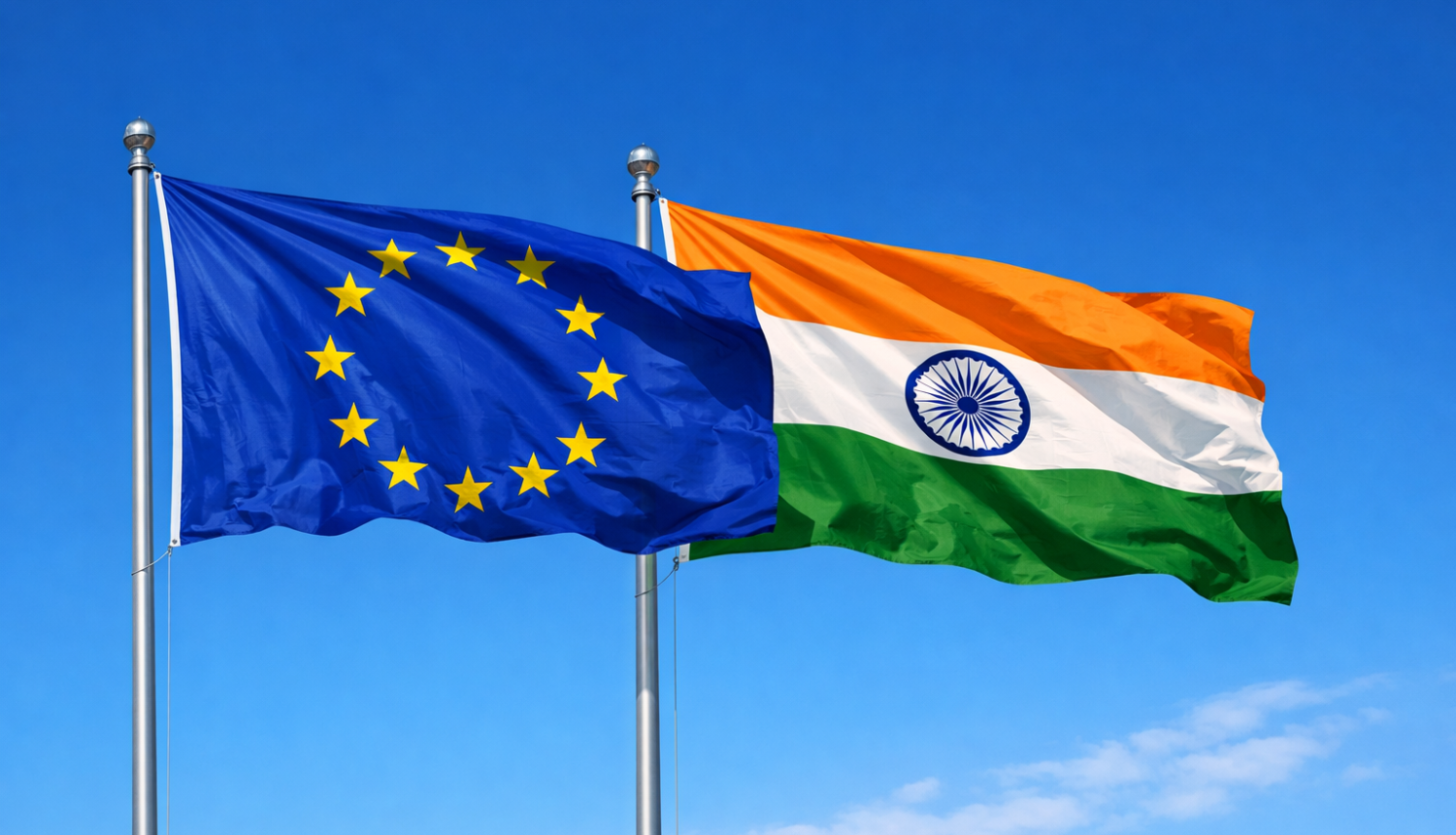
On 27 January 2026, in the Indian capital of New Delhi, the European Commission (EC) and India finalised negotiations on the conclusion of a free trade agreement (FTA). The negotiations, which began 20 years ago, culminated in a commercially significant and ambitious agreement between the European Union, the world’s second largest economy, and India, the fifth largest economy, creating a free trade area with two billion consumers. It is the largest agreement of this kind ever concluded by the two parties.
The Minister of Foreign Affairs, Baiba Braže:
“Latvia and India share bilateral relations, with potential to expand economic ties. The EU-India FTA will offer Latvian businesses a range of new opportunities in the world’s fastest-growing economy. At the same time, this agreement will strengthen rules-based trade globally.”
The EU and India already trade over EUR 180 billion worth of goods and services per year, supporting close to 800,000 EU jobs. The deal will see India open up its vast market to foreign partners. Particularly noteworthy are tariff reductions in areas such as automotive manufacturing (from 110% to 10%) and the almost complete elimination of tariffs on machinery (currently 44%), chemicals (currently 22%), pharmaceuticals (currently 11%). Overall, tariffs on 96.6% of EU exports to India, measured by export value, will be eliminated or reduced.
The agreement is expected to double EU exports to India by 2032. Overall, the tariff reductions will save around EUR 4 billion per year in taxes on European products.
Several Latvian companies already offer their products and services in India, including in sectors such as pharmaceuticals, ICT technologies, and chemicals. Benefits for Latvian companies:
- FTA will open up access for Latvian companies to the world’s most populous country with 1.4 billion consumers and the fastest growing major economy with an annual GDP of EUR 3.4 trillion;
- lower export costs – the elimination and reduction of tariffs on most EU goods will improve the competitiveness of Latvian companies in India;
- new export opportunities – significant potential for cooperation, especially in electronics, photonics, space, green technologies, and other high added value areas, from 5G technologies to biomedicine;
- broader opportunities for service providers – IT, logistics, transport, financial and professional services companies, where demand in India is growing rapidly;
- support for small and medium-sized enterprises (SMEs) – simpler, more transparent trade rules will reduce administrative barriers to entering the Indian market;
- investment and cooperation projects – more stable conditions will encourage Latvian companies to participate in joint manufacturing, supply chain and technology projects.
India is an important trading partner for Latvia, as evidenced by the mutual growth in exports and imports in recent years. According to data from the Central Statistical Bureau, total foreign trade turnover with India in 2024 amounted to EUR 377.3 million, an increase of 69.9% compared to 2023. Exports of goods to India in 2024 amounted to EUR 59.4 million, an increase of 28.4% compared to 2023. Imports of goods from India in 2024 reached EUR 162.9 million, an increase of 44.4% compared to 2023. According to data from Latvijas Banka (Bank of Latvia), exports of services to India in 2024 amounted to EUR 37 million, an increase of 85% compared to 2023, while imports of services amounted to EUR 118 million, an increase of 174.4% compared to 2023.
The agreement removes or reduces often excessive tariffs (on average more than 36%) on EU agricultural and food exports, opening up a huge market for European farmers. Sensitive European agricultural sectors will be fully protected, as products such as beef, chicken, rice, and sugar are excluded from liberalisation under the agreement. All Indian imports will continue to be subject to the EU’s strict health and food safety rules.
The next step will be the legal review and translation of the agreement text into all EU languages. The European Commission will then submit a proposal to the Council for the signing and conclusion of the agreement.
The EU and India had first launched negotiations for a free trade agreement in 2007. The talks were suspended in 2013 and then relaunched in 2022. The 14th and last formal negotiating round took place in October 2025, followed by intersessional discussions at technical and political level.