



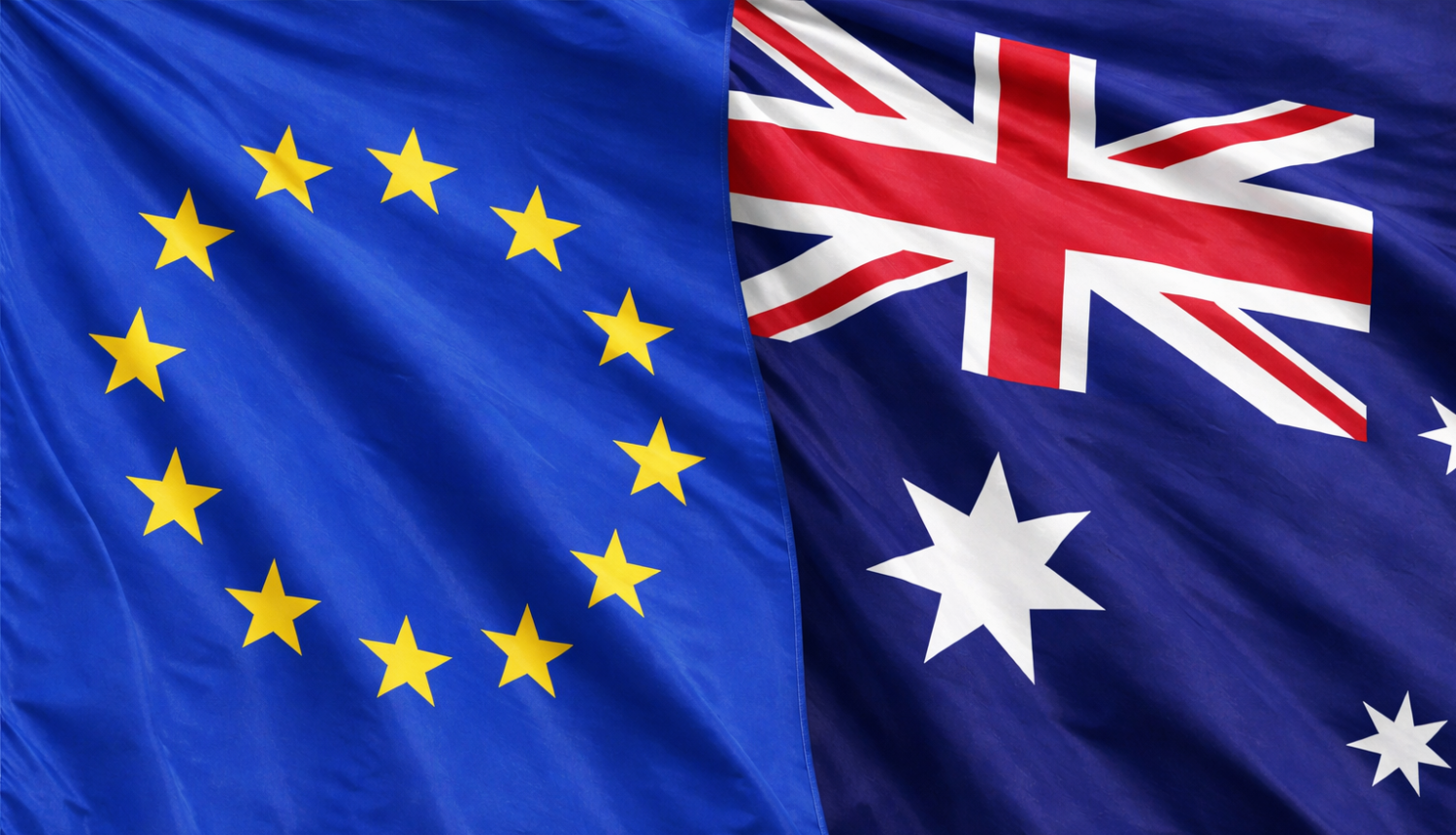
On 24 March 2026 in Canberra, the European Commission (EC) and Australia concluded negotiations on a balanced free trade agreement (FTA), creating a free trade area with more than 450 million consumers. Australia is one of the world’s fastest-growing developed economies, so the FTA will offer significant opportunities for European companies and farmers, including those in Latvia.
The FTA will eliminate more than 99% of tariffs on EU goods exported to Australia. EU exports to Australia are expected to grow by as much as 33% over the next decade, reaching up to 17.7 billion euros annually. Overall, the tariff reductions will save EU exporters approximately one billion euros annually in taxes.
The main EU product groups that will benefit from the EU–Australia FTA include dairy products (expected growth in exports – 48%), vehicles, and chemicals. The FTA will eliminate tariffs on the EU’s current major export categories to Australia, such as cheese, meat products, wine and sparkling wine, certain categories of fruit and vegetables, chocolate, and pastries. The removal of tariffs could provide a new momentum for growth in Latvian exports to Australia.
The agreement takes into account the interests of EU farmers. For sensitive agricultural sectors such as beef, sheep and goat meat, sugar, some dairy products, and rice, the FTA will allow zero or lower tariff imports from Australia only in limited amounts, through carefully calibrated tariff-rate quotas.
In the services sector, Australia will open its market to financial and telecommunications services. In addition, support will be provided to both EU and Australian small and medium sized enterprises to increase their exports.
Following recently concluded deals with Indonesia and India, this FTA will further diversify the EU’s network of trading partners in the strategically important Indo-Pacific region.
Latvia’s exports to Australia have been increasing in recent years, and Australia is becoming an increasingly important trading partner for Latvia. According to data from the Central Statistical Bureau, the value of Latvian exports in 2025 was 55.24 million euros, which is 8 million euros more than in 2024. Latvia’s main export goods to Australia are wood and wooden products, furniture, machinery, electrical appliances, pharmaceutical products, and meat.
The next step will be the legal review and translation of the agreement text into all EU languages. The European Commission will then submit a proposal to the Council for the signing and conclusion of the agreement.
Negotiations on the FTA with Australia began in July 2018. The last 15th formal negotiating round took place in April 2023, followed by intersessional discussions at technical and political level.
For more information, see the EC website: EU and Australia strengthen relations with Security and Defence Partnership and Trade Agreement