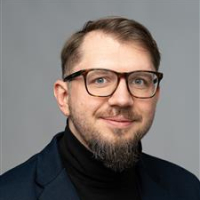

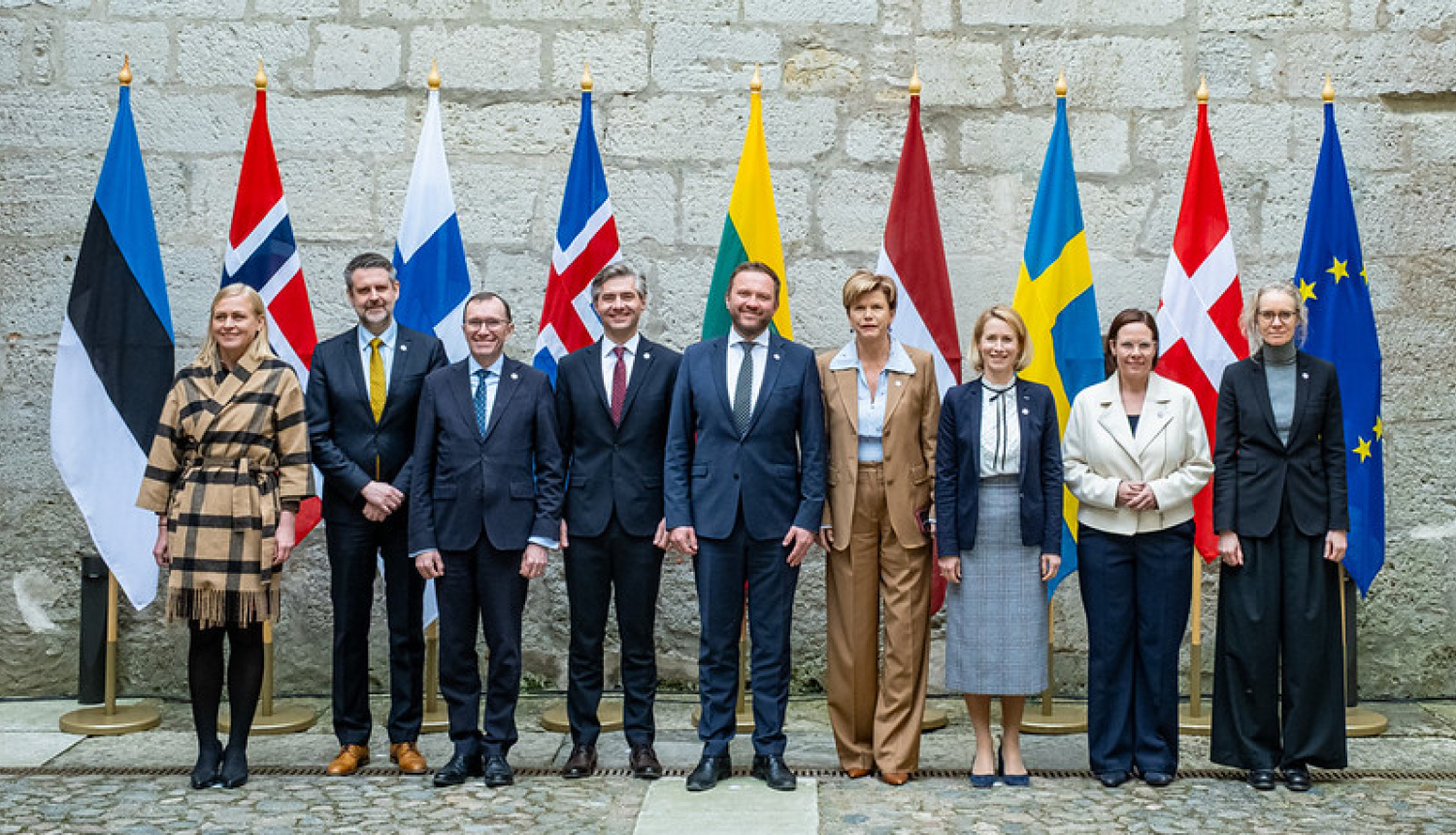
On 29–30 April 2026, the Minister of Foreign Affairs, Baiba Braže, participated in the annual meeting of the foreign ministers of the Baltic and Nordic countries (NB8). The meeting focused on support for Ukraine, strengthening Europe’s security and NATO capabilities, and tightening sanctions against Russia. Kaja Kallas, EU High Representative for Foreign Affairs and Security Policy, joined the discussion and briefed them on current EU measures regarding sanctions against Russia, support measures for Ukraine, and the impact of the situation in the Middle East on the area of energy.
The ministers agreed that a free, secure, and democratic Ukraine is a guarantee of Europe's security and expressed their commitment to continue providing Ukraine with comprehensive military and practical support, including support for the European integration process, as well as for strengthening Ukraine's security in the post-war period. Alongside support measures for Ukraine – where the NB8 countries are among the largest providers of aid – Ukraine’s own contribution to European and global security through its expertise and military technologies was also noted.
Officials expressed satisfaction with the approval of the EU’s 20th package of sanctions, emphasising the need to continue work on preparing the 21st sanctions package.
Baiba Braže emphasised that Russia must remain under constant pressure and isolation, both politically within international organisations and at major sporting and cultural events, as this is the only way to encourage change and strengthen global security. The Minister highlighted the need for Europe to take greater responsibility for its own security and defence by significantly increasing the defence spending of all the EU Member States, an area where the NB8 countries are already setting a good example. At the same time, she emphasised that the United States and close transatlantic cooperation are an indispensable foundation for European security. The EU’s defence efforts must therefore be complementary to, and strengthen, NATO’s capabilities.
Since all NB8 countries are NATO allies, discussions focused on preparations for the NATO Summit in Ankara, Türkiye. Ministers agreed that it is particularly important at the upcoming summit to reaffirm the Alliance’s unity, the enduring significance of the commitment under Article 5, the determination to continue providing long-term support for Ukraine, and to demonstrate progress on increasing defence spending.
The situation in the Middle East and international efforts to ensure access to the Strait of Hormuz were also discussed. Baiba Braže briefed on the ongoing work within the UN Security Council regarding the situation in the Middle East. Ministers emphasised the need to protect civilians and prevent further escalation. They also discussed the impact of the conflict on the NB8 region and the measures at both national and EU levels in response to the oil supply crisis and its consequences.
Additional information
- In 2026, NB8 cooperation in the field of foreign affairs is coordinated by Estonia. Estonia has set the following priorities for its year as NB8 coordinator: 1) to promote the NB8 as the primary framework for cooperation among the Baltic and Nordic countries in coordinating their positions on international and regional agenda items; 2) to strengthen the international significance and visibility of the NB8 as a group of like-minded countries; 3) to increase the competitiveness of the NB8 region and promote cooperation in sectors with an emphasis on defence, digital issues, the economy, education, and culture.
- The NB8 is an informal cooperation format which includes Denmark, Estonia, Iceland, Latvia, Lithuania, Norway, Finland, and Sweden.
- More information on NB8 cooperation is available on the Ministry of Foreign Affairs website