
 Flickr
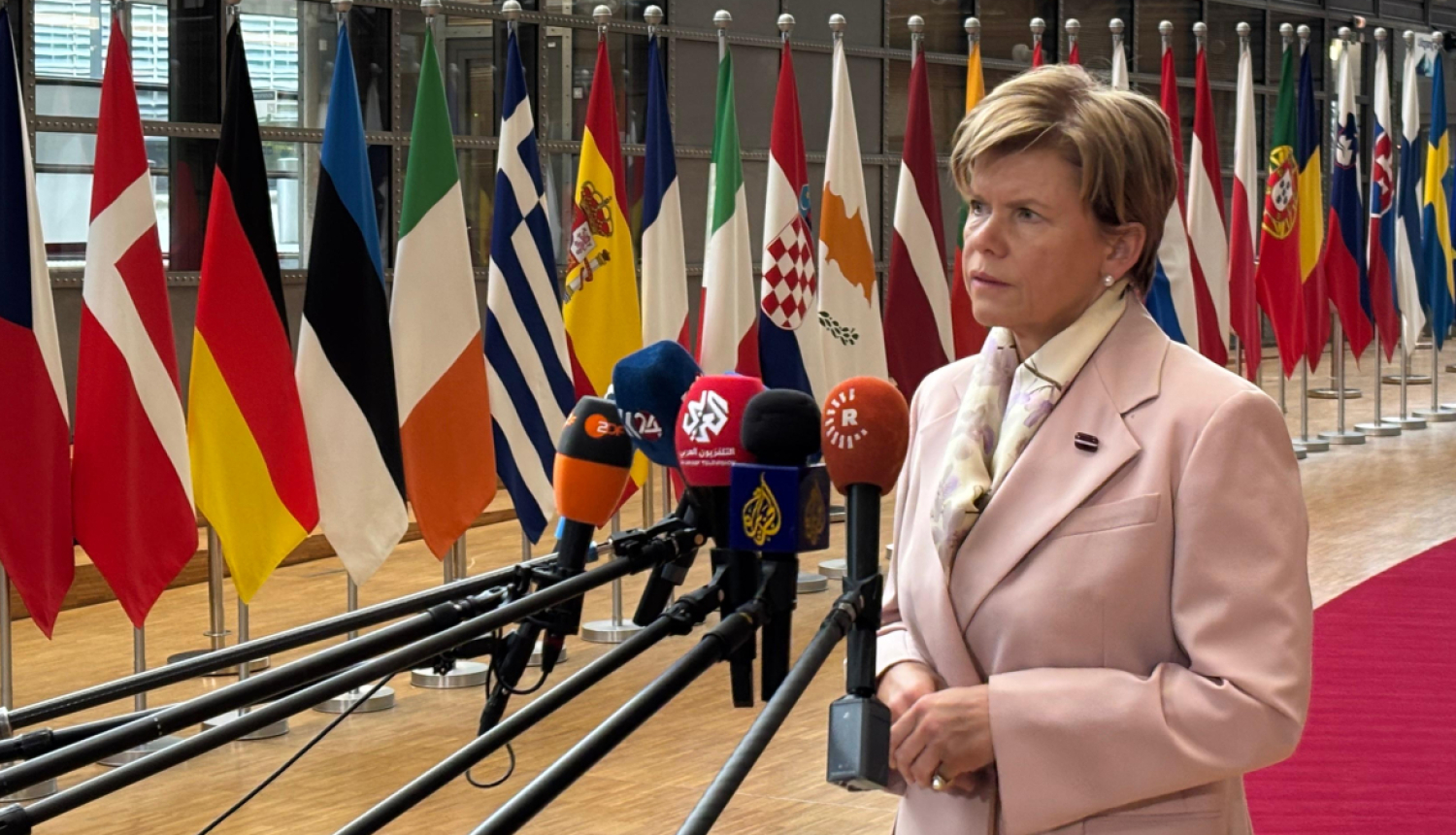
On 11 May 2026, in Brussels, Belgium, the Minister of Foreign Affairs Baiba Braže emphasised at the European Union (EU) Foreign Affairs Council the need to continue and strengthen support to Ukraine, while maintaining economic and political pressure on Russia. The meeting approved a EUR 90 billion loan to support Ukraine, adopted the 20th round of sanctions against Russia, and extended the mandate of the EU Advisory Mission Ukraine.
At the meeting, which was also attended by the Minister of Foreign Affairs of Ukraine Andrii Sybiha, Baiba Braže emphasised that the EU remains Ukraine’s strongest supporter and that significant steps have been taken in recent months to support Ukraine. She noted that the EUR 90 billion loan will strengthen Ukraine’s economy and reforms, while also serving as an investment in Europe’s security.
“Support for Ukraine is an investment in the security of all of Europe”, Baiba Braže emphasised.
The Foreign Affairs Council formally approved the expanded mandate of the EU Advisory Mission Ukraine (EUAM Ukraine) and the decision to conclude the Convention establishing an International Claims Commission for Ukraine. The sanctions regime includes 16 individuals and 7 legal entities linked to the unlawful deportation, forced adoption, and re-education of Ukrainian children in Russia.
Baiba Braže emphasised that since February 2022, Latvia’s total support for Ukraine has exceeded EUR 1 billion, or 0.6% of GDP. Of this amount, EUR 675 million has been allocated to military support, EUR 92 million to humanitarian aid and support for the Ukrainian government, EUR 304 million to support Ukrainian civilians in Latvia, and EUR 17 million to reform, development, and reconstruction projects. Also in 2026, 0.25% of GDP is planned to be allocated to military support for Ukraine, and on 27 May, Latvia will host the second International Drone Summit.
The Minister emphasised that stable security guarantees are essential for a just and lasting peace in Ukraine, and also stressed the need to begin formal accession negotiations with Ukraine and Moldova as soon as possible.
Speaking about increasing pressure on Russia, Baiba Braže noted that sanctions are working – between 2022 and 2025, Russia spent an additional USD 130 billion to mitigate the impact of sanctions, and will lose at least another USD 136 billion by 2030. The Minister called for continued restrictions on the Russian economy, action against the “shadow fleet”, and the swift completion of the 21st round of sanctions. “Russia understands only the language of force and price – the longer we delay, the higher the price will be for Europe”, emphasised Baiba Braže.
Discussing the situation in the Middle East, Baiba Braže emphasised the need to strengthen EU cooperation with the Gulf States and noted that any blockade or closure of the Strait of Hormuz by Iran would be illegal and unacceptable. Latvia supports international efforts to ensure freedom of navigation in the Strait of Hormuz.
The Council reached an agreement to lift the partial suspension of the EU-Syria Cooperation Agreement, thereby lifting restrictions on imports into the EU of Syrian crude oil, petroleum products, gold, precious metals, and diamonds. Restrictive measures against cyberattacks threatening the EU or its Member States have also been extended.
During a meeting with the Ministers of Foreign Affairs from the Western Balkans, Baiba Braže emphasised the need to strengthen the EU’s presence in the region, limit the influence of third countries, and promote resilience against disinformation. During the talks with the Minister of Foreign Affairs of Canada, Anita Anand, the Minister commended the close cooperation between Latvia and Canada in the field of security and defence, including Canada’s leadership of the NATO Multinational Brigade in Latvia.
During the visit, Baiba Braže also met with the Minister of Foreign Affairs of Ireland Helen McEntee and NATO Secretary General Mark Rutte with whom she discussed strengthening NATO’s presence in Latvia, the strengthening of Latvia’s air defence capabilities, and preparations for the Meeting of NATO Ministers of Foreign Affairs this May and the upcoming NATO Summit in Ankara, Türkiye, in July.