
 Flickr
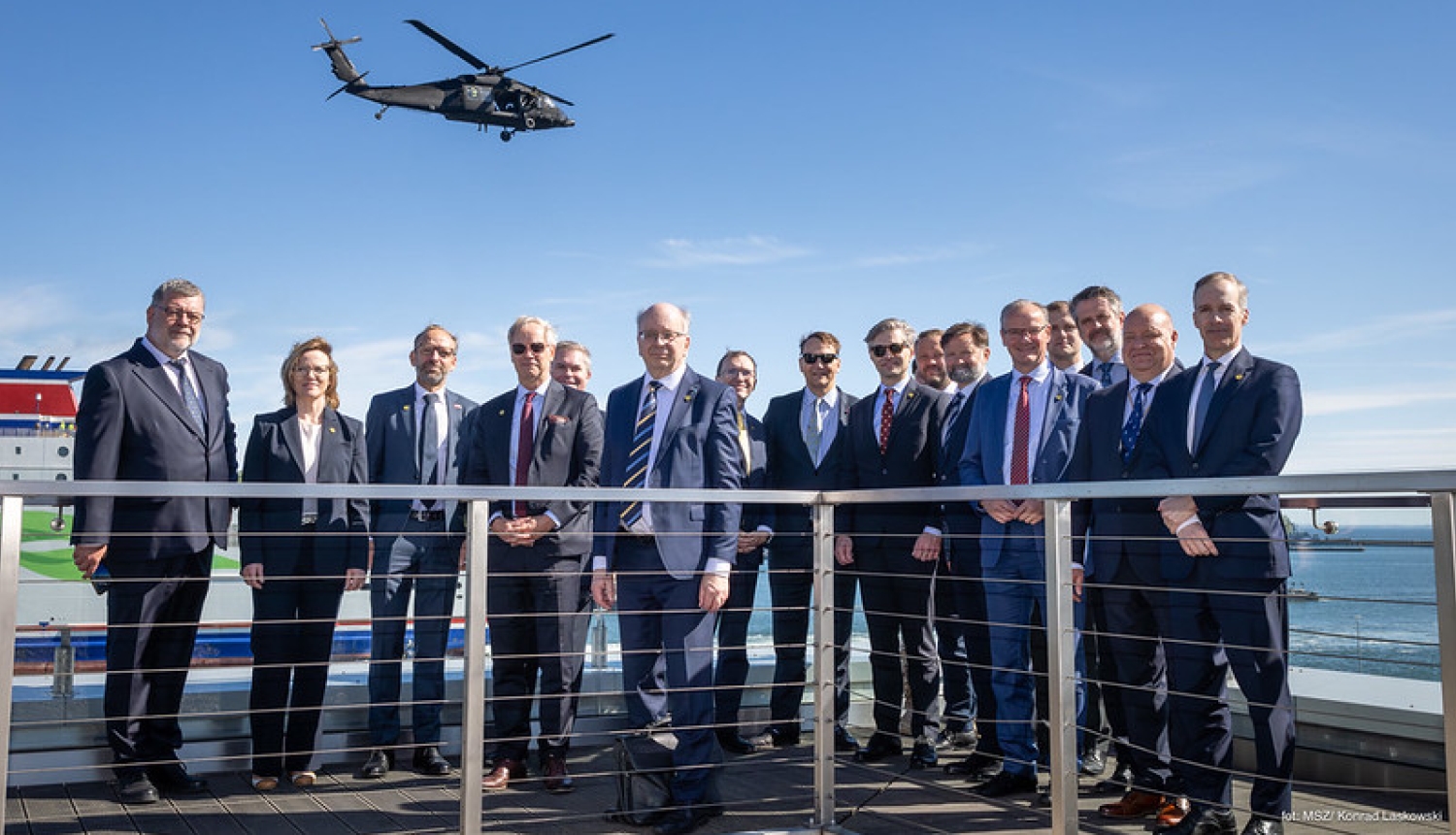
On 28 and 29 May 2026, the Parliamentary Secretary of the Ministry of Foreign Affairs, Artjoms Uršuļskis, participated in the ministerial meeting of the Council of the Baltic Sea States (CBSS) in Sopot, Poland. The ministers discussed current security challenges in the region, the situation in Ukraine and transatlantic relations. They expressed full solidarity with Romania and condemned Russia’s drone strikes affecting Romania.
Discussing the security situation in the Baltic Sea region, Artjoms Uršuļskis noted that Russia’s rhetoric is becoming increasingly hostile and confrontational. Opposing Russia requires a demonstration of unity and mutual solidarity, both in the Baltic Sea region and within the transatlantic community. The Parliamentary Secretary thanked allies for their support to Latvia in countering Russia’s disinformation campaign regarding the entry of drones into Latvian airspace. He emphasised that it is important to strengthen NATO’s defence and deterrence capabilities, adapting them to the threats posed by Russia. From Latvia’s perspective, it is necessary to further strengthen NATO’s eastern flank, particularly in the areas of air and anti-drone defence. It is important to draw on Ukraine’s experience and integrate the most successful solutions into the defence industries of Latvia and other NATO countries. As Ukraine is an observer state of the CBSS, Artjoms Uršuļskis called for strengthening cooperation in the field of civil protection and for continuing the implementation of mutually beneficial projects that enhance societal resilience. Artjoms Uršuļskis also emphasised that regional cooperation is important in countering Foreign Information Manipulation and Interference (FIMI), which should be set as a priority for the next presidency. A regional approach could add value by strengthening public resilience. It is important to strengthen cooperation with centres of excellence and to engage young people in order to reach audiences more effectively.
Artjoms Uršuļskis emphasised:
“Latvia prioritises and actively works to strengthen NATO and the EU’s eastern border. We are advancing the Baltic Defence Line and Eastern Flank Watch projects, as well as counter-mobility measures and the development of anti-drone capabilities. However, the security of Europe’s eastern borders must be a shared priority for both the EU and NATO. We expect swift decision-making and rapid project implementation, as well as financial support.”
The foreign ministers of the Baltic Sea states agreed that pressure on Russia must be increased in order to weaken its ability to continue its war of aggression in Ukraine. The Parliamentary Secretary noted that it is essential to strengthen sanctions against Russia’s shadow fleet, both by stricter enforcement of existing restrictions and by the introduction of additional sanctions, including a complete ban on maritime services for the export of oil and petroleum products.
At the conclusion of the meeting, the foreign ministers adopted the Sopot Declaration.
Poland holds the CBSS presidency from 1 July 2025 to 30 June 2026, after which Iceland will assume the presidency.
The CBSS was founded in 1992. Its members include the three Baltic states, the five Nordic countries, as well as Poland, Germany, and the European Commission.