
 Flickr
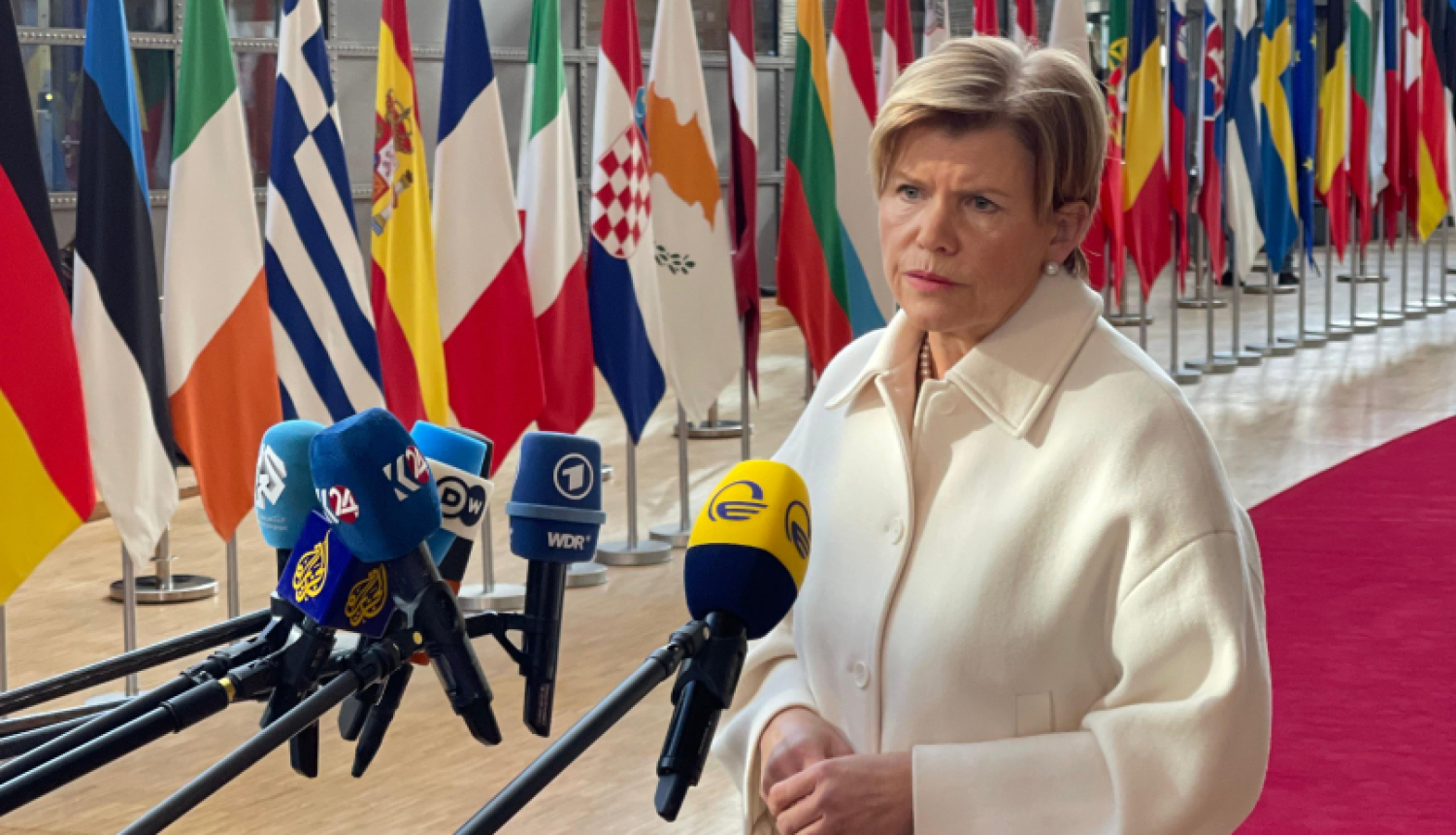
On 16 March 2026, at the EU Foreign Affairs Council in Brussels, Belgium, Foreign Minister Baiba Braže emphasized:
“Russia continues to attack Ukraine, supports Iran’s attacks on countries in the Middle East and the Gulf, and destabilises Africa. Russia's attack on the Novodnistrovsk hydroelectric power plant in Ukraine has caused an oil spill in the Dniester River, directly threatening Moldova's water supply and public health.
Russia is a common problem for all of us, and its threats remain a source of a global security crisis. All allies and like-minded partners must increase pressure on Russia – through new sanctions, including the urgent adoption of the 20th round of EU sanctions and by intensifying efforts against Russia’s shadow fleet. We must also continue to isolate Russia internationally, denying it access to Western technologies, severing all trade links with it and preventing attempts to circumvent sanctions.”
The Foreign Ministers discussed the situation on the front lines, Ukraine’s most pressing needs, and developments in the Middle East with the Minister of Foreign Affairs of Ukraine, Andrii Sybiha. Baiba Braže urged all EU Member States to continue providing comprehensive support to Ukraine by contributing to NATO’s PURL initiative to ensure the provision of essential military equipment. To date, Latvia has contributed 17.2 million euros.
Foreign Minister Baiba Braže met with the Minister of External Affairs of India, Subrahmanyam Jaishankar, and discussed the future direction of the EU–India strategic partnership, the priorities of the EU and India’s foreign and security policies, and the situation in the Middle East.
Baiba Braže discussed Latvia’s priorities for the next EU Multiannual Financial Framework with the European Commissioner for Budget, Anti-Fraud and Public Administration, Piotr Serafin, including the strengthening of the eastern border, which is a matter of security for the entire EU.
At the EU Foreign Affairs Council:
- Individual sanctions against 19 additional persons were adopted under the Iran human rights sanctions regime;
- Five additional persons (four from China and one from Iran) were added to the cyber sanctions regime in relation to cyberattacks against the EU or its Member States. In total, 19 individuals and seven organisations, mainly from Russia and China, are currently subject to the cyber sanctions regime;
- Under the sanctions regime regarding Ukraine’s territorial integrity, individual sanctions were adopted against nine additional individuals involved in the crimes committed in Bucha;
- The sanctions regime regarding destabilising activities carried out by Russia (hybrid threats and malicious activities) now applies to four additional individuals.
The EU Foreign Ministers discussed the security situation in the Middle East and the EU’s role, cooperation with the EU’s Southern neighbours since the entry into force of the Pact for the Mediterranean last November, as well as the EU Security Strategy.